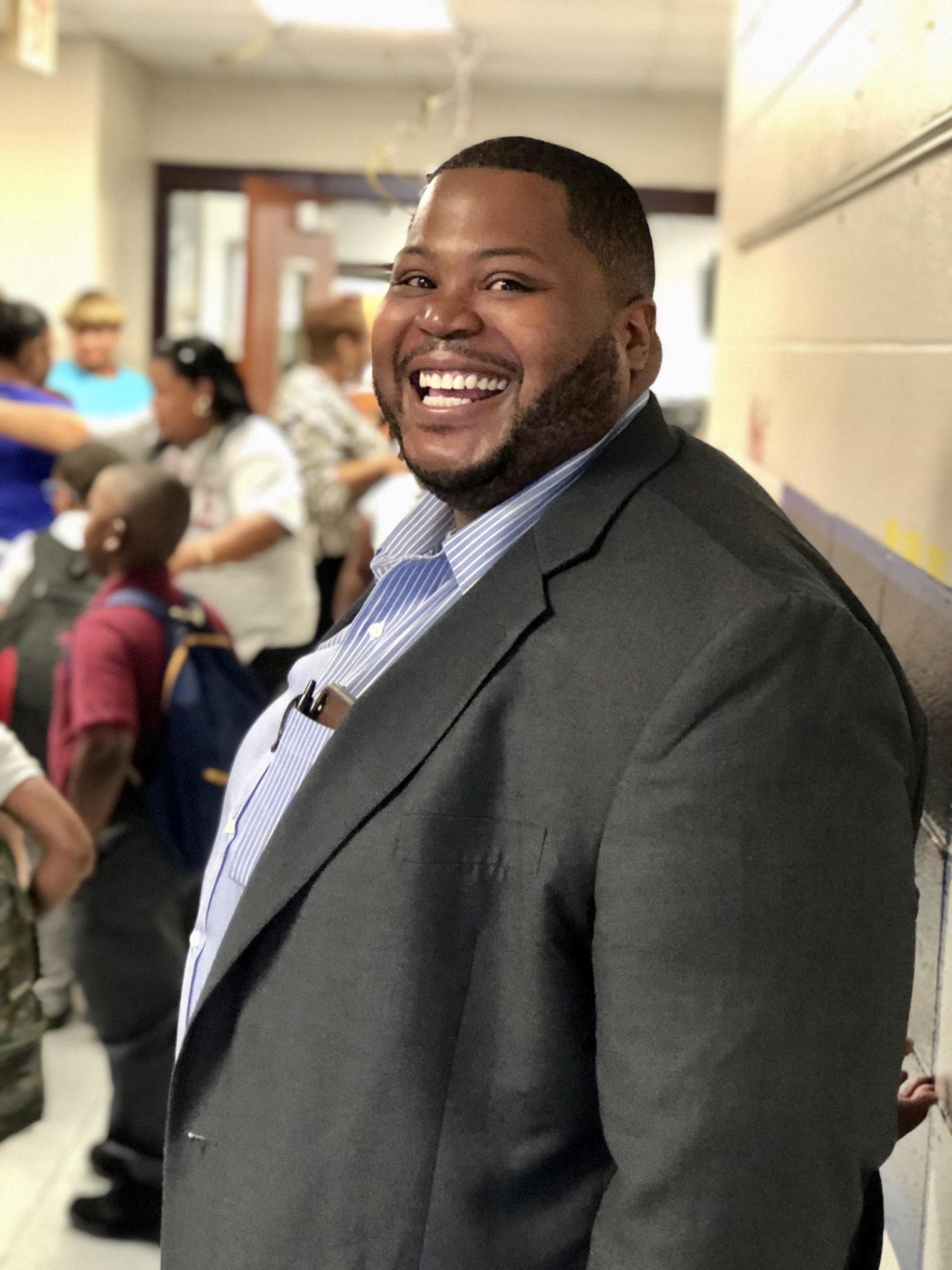
“I was born and raised in Happy Hills. I graduated from Alabama A&M and Cumberland School of Law, but growing up in Happy Hills was the best education I had. It taught me not just about crime, drugs, violence, and poverty. It taught me about humanness, seeing people as people, and the empathy that comes from that. Those revelations are recent. As a child growing up in Happy Hills, there was bitterness and resentment for being in that situation. I hate to admit the pride came later.
I failed the third grade and by the grace of God, I was put in Linda Haidt’s class.We couldn’t be more different, she was a small-framed white woman who eats and sleeps the river. I don’t know how she ended up at Glendale Elementary in Prichard. She invited me to go canoeing. I told her black people don’t canoe, but invite me to fish and I will come. She invited me to fish, but she still tried to convince me to get in the canoe.
Mrs. Haidt sobbed in front of our class as she read the story of Addie Walker, a former slave who found her way to freedom. She looked at us and told us we could be anything we want to be no matter what it feels like now. For the first time, I heard that and took it to heart. I started to believe life could be different. I was not a slave on a plantation, but I was in bondage to a reality I didn’t think I could escape.
Even with a lesson like that, you can’t dream of something you can’t see. My dream was daily survival. It was hard to see myself in any other reality. I didn’t meet my first black lawyer until I was a senior in high school and she was picking up a friend from school.
I was a first-generation college student in my family. It was a hurdle to think I belonged and that I deserved to be in college. I graduated Summa Cum Laude because I was afraid of failure. I was afraid to go back to Happy Hills and look in the face of people who said I didn’t deserve to go to college and the ones who were proud to see me go. My sixth grade teachers brought carloads of things I would need before I left for college for the first time. I worked my ass off so I wouldn’t let anyone down. Many of my decisions were made through the lenses of other people and it is hard for me now to do things that seem selfish.
After law school, I taught seventh-grade social studies with Teach for America for two years in a Huntsville school that was one of the worst in Alabama. Teaching kids who grew up like me helped me get past my own bitterness and resentment. I built a classroom culture on trust and relationship. Impact does not happen from transactional instruction.
I asked my kids what do you dream of doing and followed up if with if you didn’t live where you live, what would you want to be. Then we talked about why those are two different answers. Despite your current reality, you can still be what you dream of being.
I always had a connection to Mobile. One of the greatest exports in Mobile is black talent. Bright students go away to college and they don’t return. A lot of it has to do with the culture. Black and white. I have been presented with amazing opportunities outside of Mobile, but it doesn’t feel right. It’s not home. If I am going to work from a place of passion I want to be where I know their stories, and they know mine. Where I can run into my neighborhood candy lady at Walmart and she says I am proud of you.
I became a prosecutor in the Mobile DA’s office and handled thousands of criminal cases. I left there to do corporate defense work with Starnes Davis Florie and represented business and corporations being sued. Then I found myself back in non-profit with FUSE Project and the Historic Avenue Foundation in partnership with Purpose Built Communities.
To alleviate the impact of generational poverty, you have to focus on holistic community revitalization in a place-based setting. Our one mile by one mile is the avenue community. It starts were Broad meets Beauregard, going up MLK. We focus on mixed-income housing and supporting a K-12 pipeline believing that every kid can learn and deserves an excellent education. Community wellness is also a part.
We aren’t saying let’s fix you. We are going in with gloves to transform the community the way they want it. It honors the legacy of the community and respects the people currently there. We announced this about eight months ago and now the real engagement begins. We are having meetings in homes and churches. This will not work if the community does not trust us and they are not a part of the process. We need the people who are closest to the pain to have the power to fix the problem. We will launch a capital campaign soon. Mobile is a hidden treasure, there are people with talent, resources, and information who can help. Tell us how we can be better. We can use purpose build communities in five areas in Mobile. Baldwin County can use this community revitalization. We hope it spreads, but the problems didn’t happen overnight, and solutions take time.
I have learned about being vulnerable and speaking truth. Some people may not get to be a part of the conversations I get to be a part of. I am not the Rosetta stone for black people and never want to be. I want my use my voice in a way that honors and respects the legacy of the community and the people who are currently there. We have to be as bold and stubborn and tenacious as the problem. I want this to work so badly.
We are giving out package meals, fresh fruits, and vegetables with Feeding the Gulf Coast every other Friday. Every Saturday and Sunday we also provide warm meals that are free to individuals and families in need and to help local businesses during this time. Today is El Papi and we give meals out at the MAMGA Den at 305 MAMGA Drive. You can pick up at 12:15-1:30, but come early.
If we don’t get out there and feed, there are people who will not eat. It is bad out there right now for business owners, but it is really bad for low-income communities who don’t have the privilege of quarantining and social distancing. There is a fear and the statistics are showing an overwhelming impact on poor, black communities. There is also the hope of people saying we are in this together. People mean it and they feel it.
I am learning to give myself the grace that I so freely give other people. So much of my life has been feeling inadequate or less than. I do okay financially now, but it is hard to feel anything less than poor. There is a lot of trauma from being the poorest person in college and barely making it through law school. I had to overcome something every day of my life, and it is an adjustment to not be constantly overcoming. I have a brick from my old unit at Happy Hill that I will frame one day. It sounds strange that I have to give myself permission to be happy and see myself beyond Freddie from Happy Hills.
My mother died a short while ago. I didn’t always understand or appreciate her sacrifices while she was living, so Mother’s Day is a hard time for me. I hope my life honors her in some way. I have found so much love and hope in Mobile. I want to be a part of that and share it with others who need it.”
A wonderful story. Best wishes for a great future, Fred.