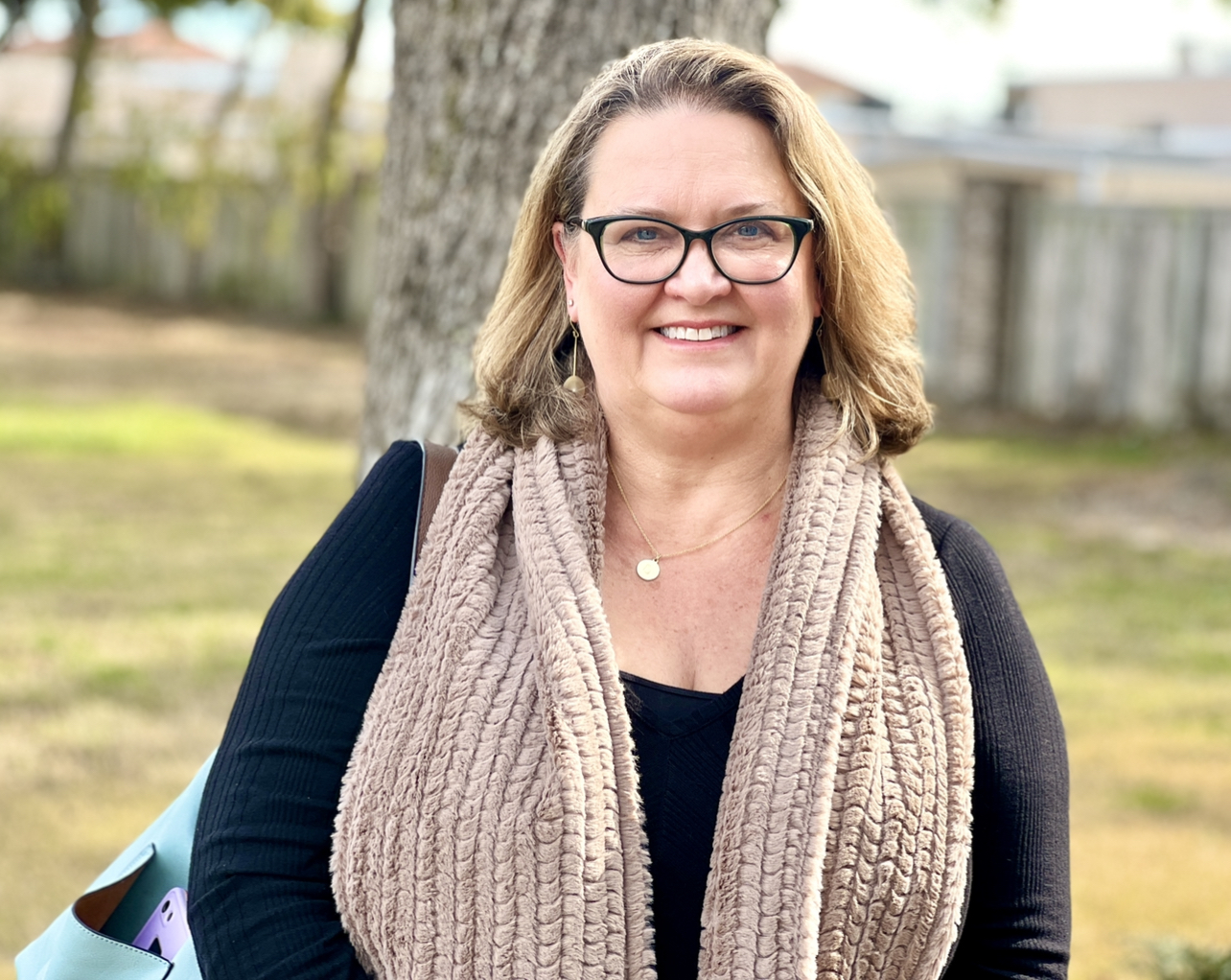
“I was born in Atlanta. My dad was in the Army, so we moved around a lot. We settled in Memphis for my middle and high school years.
I had a fabulous teacher in high school named Frank Bluestein. He was the drama teacher but taught a mass communications class. I took to that. They also had a broadcast journalism category at thespian competitions where you would rip and read the news. We rewrote the copy and did a newscast. I was pretty good at it, and that became what I studied at the University of Alabama. I worked for the college radio and TV stations, including WUAL, which became the flagship station of Alabama Public Radio.
After college, I worked for Alabama Radio Network giving headlines and hourly newscasts to hundreds of commercial radio stations. Covering the legislature was also part of my beat. It was George Wallace’s last administration. If you look at his retirement speech, you see a girl with big, beautiful, very high Tennessee hair. I was sitting down with this giant microphone at the wheels of his wheelchair because we were broadcasting it live around the state. It was a lesson in politics and history in Alabama.
I plugged into modern history courses and minored in English and political science. All of that trained me; however,I went back to grad school thinking I wanted to be a political consultant. I was pulled away to be news director at a commercial station in Tuscaloosa called FOX. Then I became the news director for Alabama Public Radio. My career always flowed back to public radio. I have been on staff for NPR for 25 years, but I have been doing it longer than that.
My husband and I moved to Orange Beach in 1992, and I did freelance reporting from here. There was a big hole in the South that NPR wasn’t covering.
Within two weeks of us moving to the coast, I covered Hurricane Andrew hitting Louisiana. Mississippi’s lawsuit against the tobacco industry became my beat and helped me get started. Before long, I got a staff position covering the South. I did a lot of stories on Alabama’s 2011 legislative efforts to crack down on immigration. Within four or five years, it became federal policy. Things often bubble up in the states that become national trends.
I’ve covered more than two dozen natural disasters. I always intend to follow up on those, but other stories keep happening. I need to get back to Lake Charles to do a story about how hard it has been for them to bounce back from all of the hurricanes.
I spent a lot of time in Brunswick, GA covering the Ahmaud Arbery murder trial. I covered the murders at the church in Charleston, SC and the deadly white supremacist rally in Charlottesville, VA. It’s horrible, but you have to cover those stories and bear witness so people understand what’s going on.
One of my more difficult experiences was covering the shooting in Sutherland Springs, Texas, when a guy shot up a Baptist church and killed 26 people. News crews from around the world were swarming and taking over the streets for live shots. The community understandably did not appreciate the media circus and did not want to talk with the media, so covering it was hard. I looked for corporate expressions of grief. I am always careful and respectful. Don’t bulldoze your way in.
I develop relationships, and that takes time. When I cover a story, I’ll prepare and have an interview set up, but 90 percent of it is just being there and being aware. I read as much as I can to prepare. I don’t do a lot of pre-interviews because I feel like people say things best the first time. I still love the storytelling, but the news cycle can get tiring. These past few years have been brutal.
Journalism has gone through changes the last 15 years and fewer people do original reporting. There are more talking heads, pontificating and yelling at each other. In my stories, I am just trying to relate to the human condition in hopes that you will understand someone else. If we can put ourselves in other people’s shoes, we might find solutions to some of the things that divide us.
There are fewer organizations that support this kind of journalism. I am lucky to work for NPR, a non-profit news organization that has people around the country and the world. Different experiences come from different places. Your environment shapes who you are. Everybody is not like the people in New York City, Washington DC, or Los Angeles, California. There’s a whole lot in between.
I also guest host on NPR’s Morning Edition, and it’s fun to exercise different muscles. I wake up at 2 a.m. and the broadcast starts at 4 a.m. There are many scripts and a director who magically keeps everything rolling.
I went to Washington D.C. to cover Congress and hosted “All Things Considered” on the weekends for two years. That is not as satisfying as covering the South with its history and characters. People here tell you their stories, you just have to be willing to listen.
I learn something from every story. I am usually moved and inspired when people share their experiences with me. It’s being open to what’s happening and ready when someone is put in your path. The most rewarding stories have threads that tie together culture, history, and sense of place.”
Debbie
0 Comments