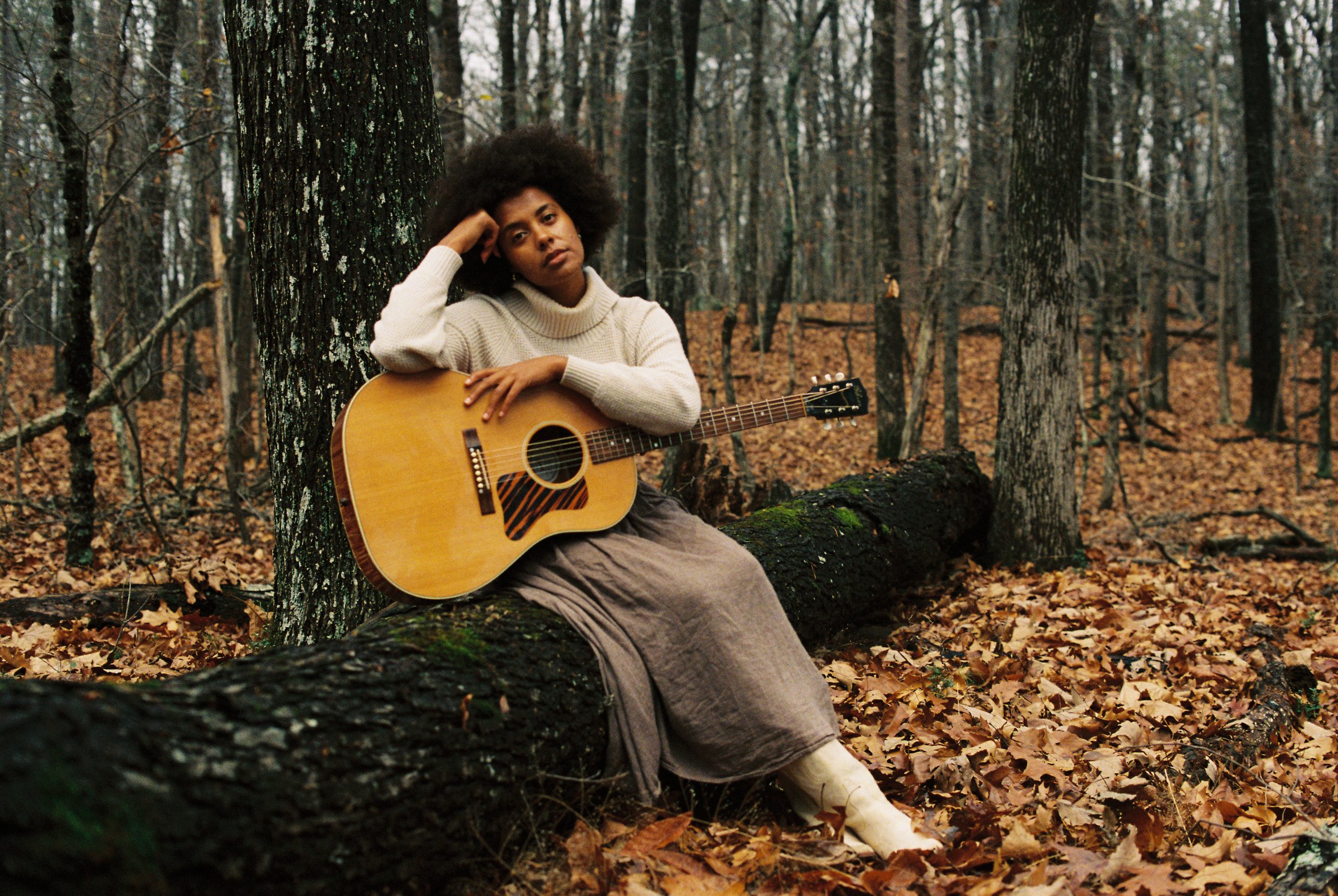
“I come from a musical family that also enjoyed camping. My dad would bring his guitar, and my parents would sing by the campfire. It was magical.
My parents gave me a little guitar for my sixth birthday. I learned to play from YouTube, learning songs by ear because that’s how my dad did it. I was a 2000s girl learning songs by Avril Lavigne and Miley Cyrus.
I was lucky to attend a hippy-dippy high school in Atlanta. We had ‘short terms,’ where teachers taught classes outside their main subject area. My teacher, Anita Aysola, taught a songwriting class, and I signed up. We had three weeks to write a song.
The song ‘Mobile’ came from that class. It was based on a trip we took to see family there. My dad is white and American, and my mom is black and Ugandan. Dad’s family has roots in Mobile. When I was about seventeen, we loaded into the minivan and went down to visit.
Our cousins had old documents and portraits and showed us the house my great-great-grandfather was born in. It was incredible to see, but disturbing at the same time.
Our family was also enslavers. That was heavy, and I didn’t want those parts to be glossed over. I was seething with anger and felt personally affected by the legacy of slavery. At the same time, these are my ancestors; I wouldn’t be alive without them. In America, I’m considered a black woman. And at the same time, ancestrally, I am not totally the victim—I’m also the perpetrator.
There’s a line in the song: ‘Get off your high horse, you’re not the victim here.’ I was trying to hold myself accountable, to tell myself: yes, your outrage is valid. And at the same time, I have to contend with my ancestors and the violent systems that they put in place. I’m not responsible for those systems or decisions, but I have benefited from their position of power. I felt I could marry both realities in that line. I don’t want to erase any of those parts of me.
There’s also a line: ‘Portraits on every wall. That’s great-grandma Sarah, slave-owner from Selma. She holds her guitar just like you.’
There are only two portraits of Sarah in our family, and in one of them she’s holding a guitar. My family said, ‘Just like you.’ It felt bizarre to be compared to her. Apparently she was musically talented, playing at family functions and gatherings. At the same time, she literally owned people.
Sometimes she comes into my mind when I play. So much of ‘Mobile’ deals with the different kinds of inheritance. There’s the dark, violent inheritance, but there’s also a musical inheritance. It’s tempting to split that apart, but that would be lying to myself. If I were to travel back in time, we wouldn’t be playing music together as a family. I wouldn’t be in her salon listening to her play. That’s a lot to hold all at once.
I’ve been playing ‘Mobile’ live for years. It didn’t occur to me to put it online until my friend Vivienne encouraged me to make a video, playing it exactly as I perform it: telling the story of ‘Mobile’ and singing the song. I was skeptical, but I tried it.
‘Mobile’ became the song that connected people with me. I started the year with a few thousand followers; now I’m in the tens of thousands. I’ve gotten messages from people of all different racial backgrounds—people internationally—reflecting on how they navigate their mixed heritage or a partner who’s a different race. Sometimes people tell me they don’t relate to my story, but it moved them. I’m grateful people are connecting to the story itself.
The song is still blowing up online, which is awesome. Annie Lennox commented on my video:
‘Ouf… several exclamation points. That’s the sound of the gut punch your incredible song delivers. You are uniquely placed at the intersection between two racial identities, with the most raw, painful divide still running between both sides. The brutal truth is simply unfathomable. While racism in the US is unashamedly expressed in infinite ways, your songs are essential and deeply significant. Much love and appreciation for your gift.’
Isn’t that amazing?
I was nervous when I submitted ‘Mobile’ to The Bluebird Cafe songwriter contest in Nashville. I was so honored to be selected as the monthly winner in April. That’s the stuff of dreams, and I got to play the Bluebird. That has also been a big boost.
Being both of anything is complicated. I was born in London, raised in Uganda and Ethiopia, and moved to the U.S. for high school and college. Now I live in Nashville. Growing up in different places made it easier to compartmentalize and be one type of Nanseera here and a different type of Nanseera there. But I’m figuring out how to make room for all the different parts of me and just let them shine and grow.
I think about going back to Mobile. Will it be an easier experience? What would I learn and notice? Can I emotionally reconcile my story? Maybe my Mobile chapter is still unfolding, and there’s more to come.”
Nanseera
Here’s the link to Nanseera playing “Mobile”.
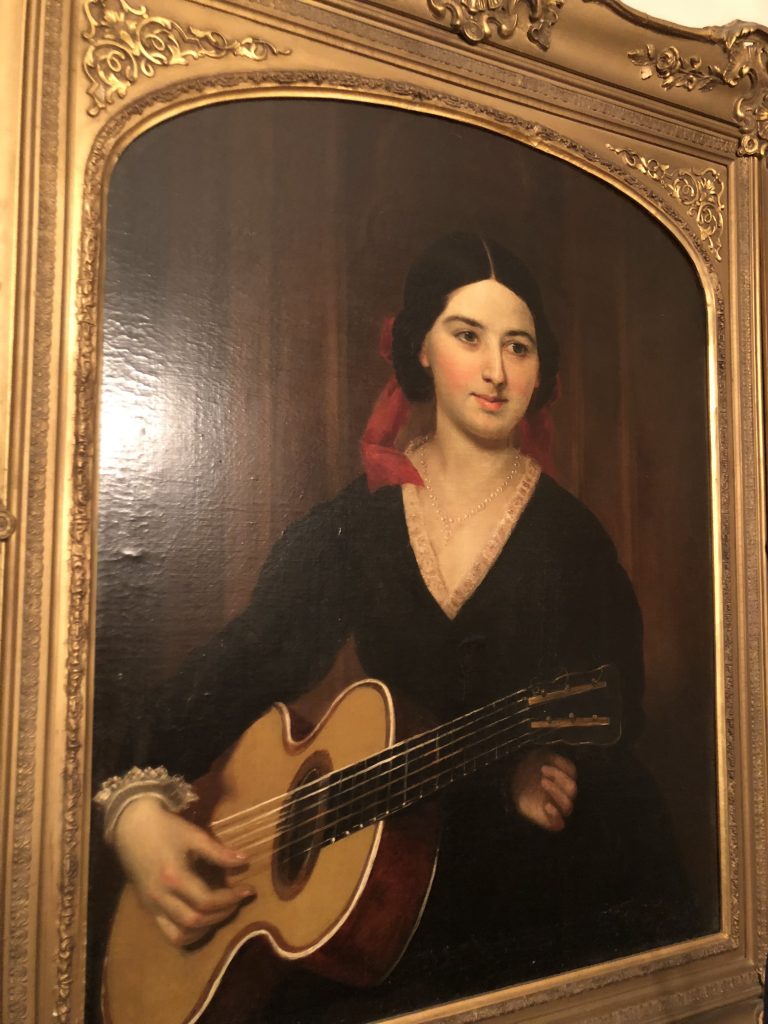
“Great-grandma Sarah”
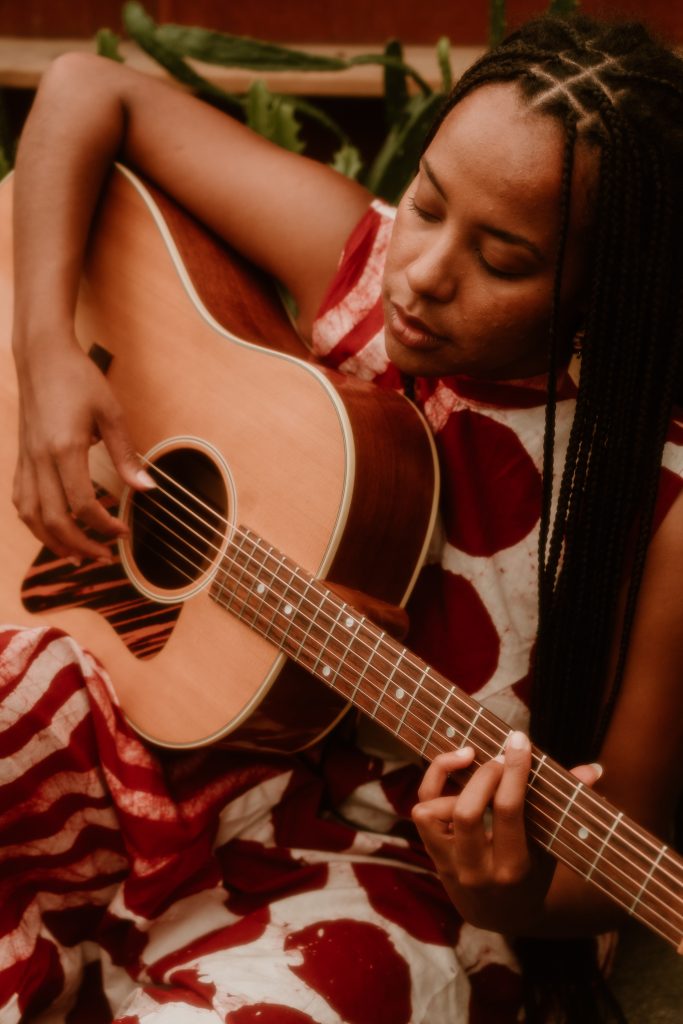
Nanseera playing guitar
(Photos courtesy of Nanseera)
0 Comments