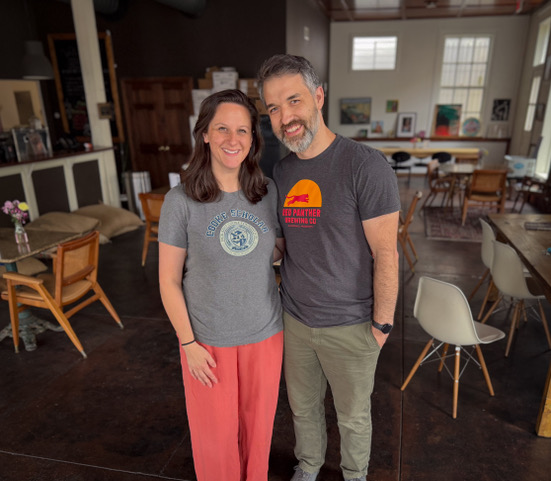
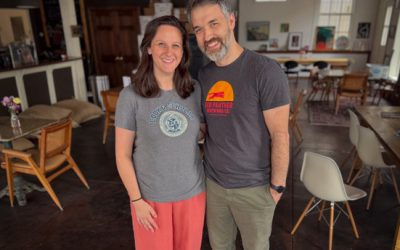
STACI: We’ve been here for 12 years. Clarksdale weirdly feels like home, but a different kind of home. It’s not my heritage or where my people are from. The Northwest will always be our roots. We miss the mountains and wish we could live with more family, but our kids are growing up here.
Clarksdale taught us about community because we didn’t have family here. My mom had cancer and passed away. It was a difficult time, but people showed up and did what I needed. They cleaned my house, picked up my kids, and brought us meals.
We want to create that support for others so they can experience that as well.
Ben and I knew each other growing up. We went to the same church.
BEN: She was my little sister’s friend. You don’t pay attention to your little sister’s friends.
STACI: But this little sister’s friend paid a lot of attention to Ben. I was very much in a Christian bubble and didn’t tell anyone when I had a crush. I turned bright red around all the boys, especially Ben. I didn’t want Ben’s sister to know.
BEN: I didn’t really pay attention until I worked for AmeriCorps Vista in Mississippi. I was placed at Pass Christian right after Hurricane Katrina in 2005.
Staci’s family had come down to visit her grandmother in Baton Rouge. It was, “You’re from Spokane, I’m from Spokane, let’s meet up in New Orleans.” That’s where it started.
STACI: My mom made him her prayer project. She had a not-so-subtle crush on Ben.
BEN: We kept in contact on MySpace. Exchanging jokes became phone calls. It was a long-distance relationship for a long time.
STACI: We dated for two years, never in the same city. It was a lot of writing. I just found our messages on an old hard drive. I was funny.
BEN: The rest is history. We lived in South Africa during our first year of marriage.
I grew up all over Spokane, Washington. My dad was a pastor and theologian. Our family always had short-term foster children, and we helped refugees settling in the United States transition and connect to resources.
My parents didn’t take vacations when I was growing up. We did things with projects or serving the community in mind. I worked on a micro-loans program in Ethiopia helping women set up small businesses. We got a bunch of sewing machines donated, and I built out the infrastructure so they could start their own businesses.
Now, Staci and I are raising our three boys the same way. How do we serve and give back? How do we build community?
We accidentally moved to Clarksdale because my background was in IT. My consulting business was built on looking at the intersection of human practices, culture, and community, and on using technology to become more effective. When we came down here, it was originally for one year.
STACI:
We are one of the few white families in our kids’ current public school. They are often the only white child in their class. We choose to be there. We can be uncomfortable in certain situations and be a part of the support in our community. We want opportunities for all kids in Clarksdale.
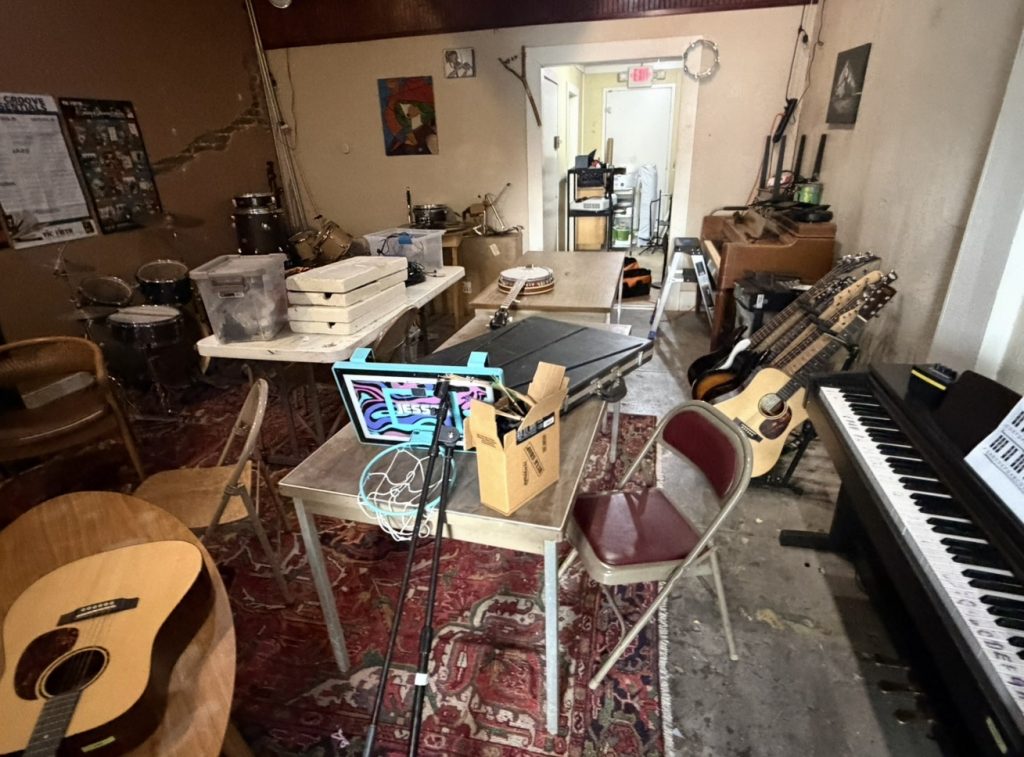
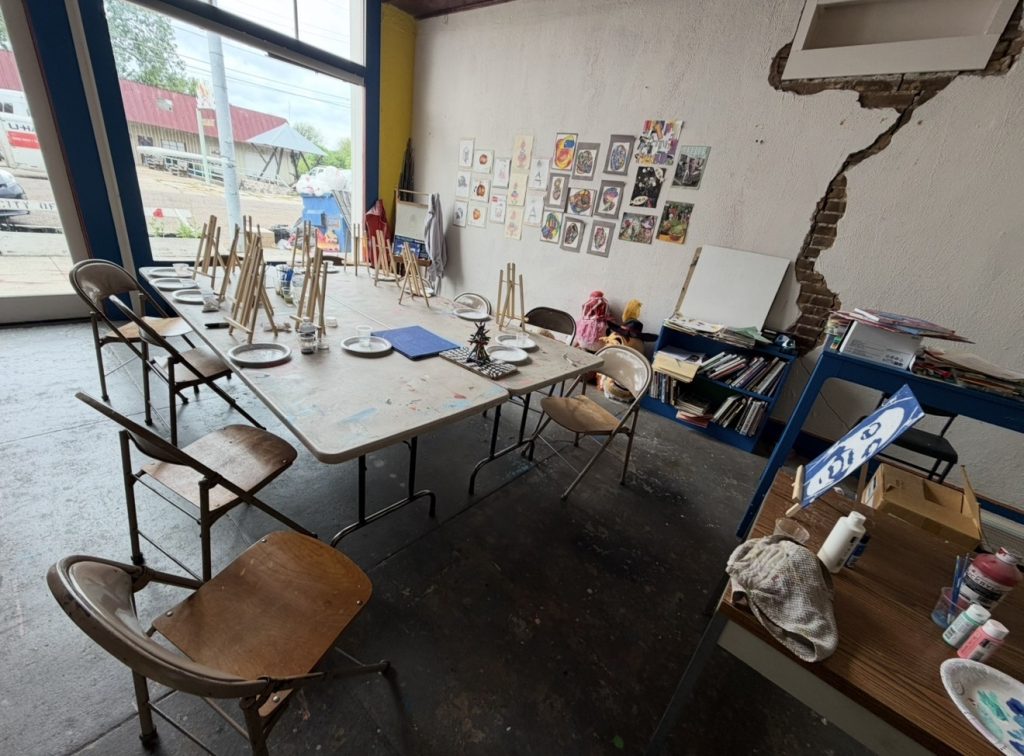
BEN: Griot Arts has been a big part of those opportunities. It was founded in 2011 by a local woman who saw the arts being removed from education and believed in what the arts do for community development and individual youth development. She started it as a small after-school arts program. The first year they were in a closet in a gym down the road. This last year, we had 126 students in our after-school program.
I came to Griot in 2016 to help the workforce development program, called Meraki. The idea was born out of the students. They had no place to hang out other than their homes. No theater, roller rink, or bowling alley. They also wanted to provide for themselves and their families, but hadn’t yet figured out how to do that.
The first iteration of Meraki focused on agriculture, where students grew produce and sold it at the farmers market. It sounded great on paper, but they quickly realized you don’t make money at a local small-town farmers market. Agriculture is also at the whims of Mother Nature. When you’re working on soft-skill development, it’s hard when you can’t control the environment.
We landed on coffee to create a product we could sell beyond Clarksdale and bring in outside revenue. We opened the Meraki Café in March of 2017. Meraki means doing something with soul, creativity and love. To put a piece of yourself into your work. Work is a part of who you are created to be.
Working with Griot and Meraki has taught me the significance of belonging. There’s a difference between belonging and acceptance.
Researcher John Powell’s work centers on belonging, using the analogy of throwing a party. I can throw a party, tell you that you’re invited, and that I want you there. But I can’t have a full sense of belonging because it’s still my party. I’m choosing the music, the food, and the activities.
To truly belong, I have to ask what music you want to hear—music I may not like. Or dancing that might make me uncomfortable. But there has to be shared co-creation. That’s where belonging comes from.
The only way Clarksdale is going to change is if we come together with intention. That requires a sense of belonging and co-creation, but it also means somebody has to be the first to step out and be uncomfortable.
If nothing is uncomfortable, nothing is going to change.
0 Comments