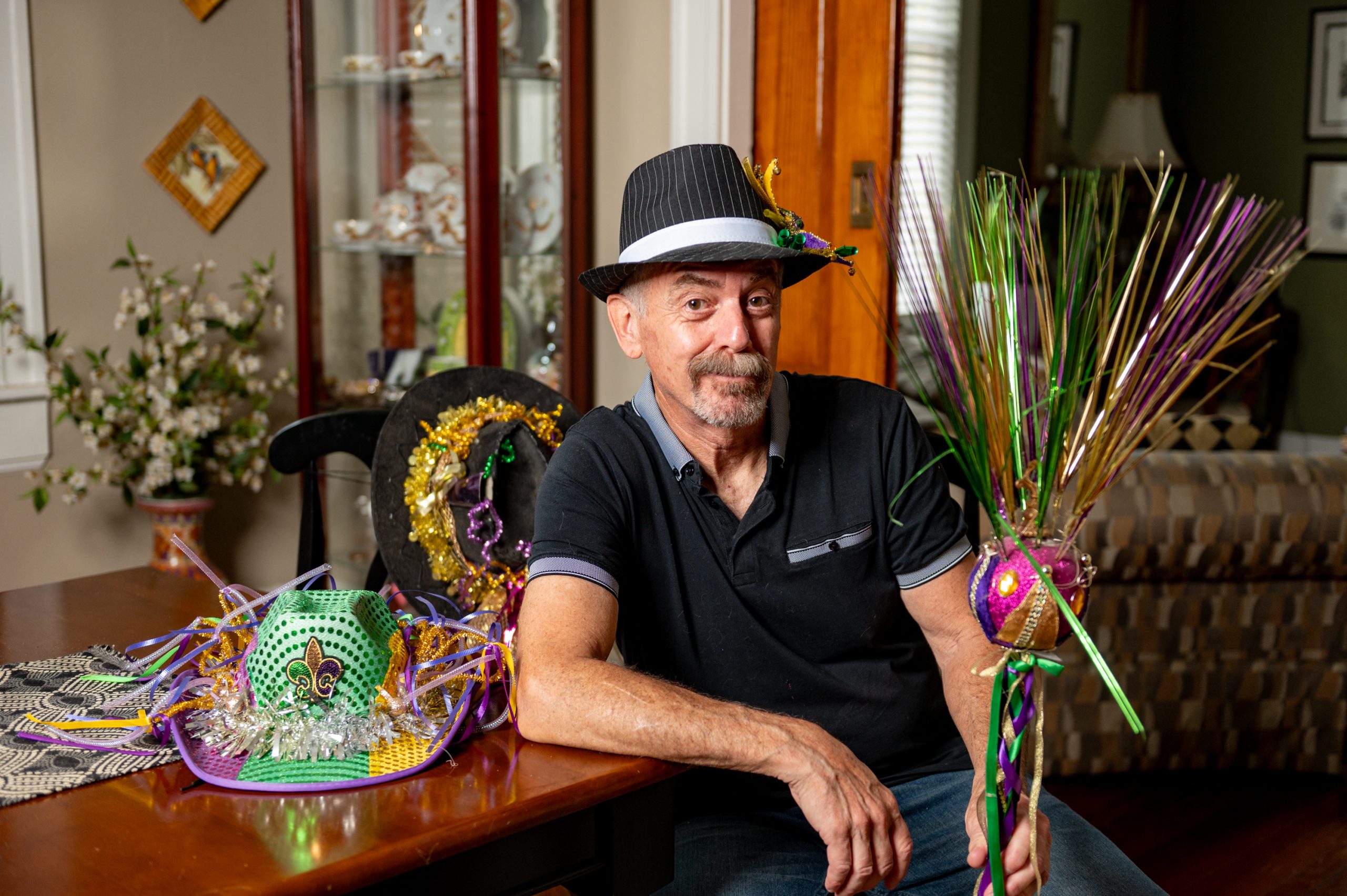
“My grandfathers were coal miners. They raised large families: six on one side, ten on the other. They raised a lot of corn and garden vegetables–that’s how they got by. I remember my grandma saying if my dad hadn’t shot a squirrel, we wouldn’t have had food on the table that night.
Back in those days, there was only the company store. It was all script, keeping the money in the coal company. Almost like indentured servitude. My grandparents wanted their kids to do better and not work in the mines–and they did. My father was an electronics instructor at Hazard Vocational School.
Dad started a cable system in eastern Kentucky. We were one of the first communities to have cable because he was part of a little group that operated it.
There was a big emphasis on excellence when I was young. We had to be better because we were perceived as not being as good because of where we were from. That humbled and inspired me.
We lived in the head of the holler on Clear Creek. My dad’s side of the family remodeled the one-room school into my grandmother’s house. She rang the old school bell every New Year’s Eve, and we’d hear it up and down the holler. She did that until she died at age 101.
Growing up, we’d go to Clear Creek where it meets Troublesome Creek. Dam it up and use it as a pool. Some streams you couldn’t play in because strip mining had polluted them so badly. I had elderly neighbors who lay down in front of bulldozers to stop them from pushing the dirt onto their land. The topsoil was pushed over the mountains, sliding down and hitting homes. There were no regulations in the 70s.
When I was in fourth or fifth grade, I had two turntables in my bedroom, and I would pretend to be a radio announcer. I sat in my mom’s car at night, listening to WLS in Chicago and other big city stations. I wanted to emulate the way they spoke because we have a very distinctive Appalachian twang. I taught myself to be bidialectal—I could turn my accent on and off.
I started in radio at 16, and I worked as the overnight guy for a radio station in college. When I graduated, my dad told me that I had to go into TV if I wanted to make more money.
After graduation, I became a reporter and anchor at what was then, a tiny NBC station in Hazard, WKYH. Have you seen WKRP in Cincinnati? Imagine that show with video. We were stringing it together every day.
Lightning was always hitting our tower. When a thunderstorm would come over, we would have to play an audio card that said, ‘Due to extreme weather, WKYH is momentarily signing off the air.’ We would shut it down so it wouldn’t fry all of our equipment. It was crazy, but I learned to make do.
I hit 29 and wanted to seek my fortune. I also needed to experience my own LGBTQ community, because there wasn’t one in Hazard. I went on a road trip to Mobile, New Orleans, and Jackson, Mississippi. I immediately fell in love with New Orleans. It’s the furthest thing from Eastern Kentucky, but I felt a kinship and wanted that Southern experience. The Mobile station made me an offer before I got home. I thought I would start out in Mobile and stay a year or two.
But then I started connecting with the LGBTQ community, and it felt comforting and exciting to find what I’d been searching for. Mike Dow became mayor, and I bought into his vision of the city. I come from a depressed area and wanted to see things like that happen.
Then the ‘Where’s Darwin?’ segments came along, where I highlighted the good things people were doing, and I really started connecting here.
Being a rodeo clown was the craziest ‘Where’s Darwin?’ I almost got trampled. This guy told me, ‘When the bull runs towards you, let it charge. But at the last second, step away.’ We’re rolling, and the bull and I stare each other down for probably three minutes. I thought, ‘I can’t stand here forever.’ I flinched and that thing came running at me.
I ran. Almost got to the fence. I don’t know if he butted me or if I fell down, but he was on top of me. He nicked my elbow and stomped my cowboy hat. The real clown got his attention and pulled him away.
I did those segments for sixteen years, staying booked up two months in advance. Then consultants said, ‘That’s not what people want to see. We’ve got to do hard news.’ They got rid of ‘Where’s Darwin?’ but that was the biggest connection people had to morning television in this town that I’ve ever seen.
The only thing we can give Mobile that people can’t get anywhere else is Mobile, so show them themselves. You saw that person at the grocery store, but you didn’t know that she sold Mardi Gras gowns. You start seeing that everybody has something to offer.
But the most important thing to me is having a person walk up to me and say, ‘It helped me when I came out to my parents to say that you were gay.’ That makes the path easier and creates a better understanding.
I moved away from Kentucky because I couldn’t endure what might come from friends and family. Moving 11 hours away, I could be myself and then go home and still be who they knew me as, but the two are the same.
My move also allowed me to find my husband. Rafael is now retired from his career as a shipfitter, a profession that began during his teenage years in Long Beach, California. We’ve now been partners for more than 34 years, sharing our home in Midtown with our three cats and a parade of possums that seem to come out of nowhere every night. You’d be amazed at how much wildlife surrounds us in the heart of the city.
I also have some of Kentucky with me in Mobile. My love of gardening comes from my family, and my mom’s geraniums come up every year outside the house. My grandma Singleton showed me a little shrub she had under a glass jar. She was at John F. Kennedy’s grave when they were clipping the hedges. She picked up pieces of the hedges, wrapped them in a wet paper towel, and took them home. She stuck the hedges in the ground and grew them.
One summer, my grandma Combs had a row of zinnias at the foot of the yard. I couldn’t see the blossoms for the butterflies. It was just alive. I never see that anymore.
Those things impress me.
I will retire from NBC 15 on May 29th. I’m looking forward to not being dominated by a clock. After doing it for more than 50 years, I want to see what it’s like not to.
The last few years, I’ve been part of three people churning out three newscasts a day. We don’t have the luxury of producing features and human interest stories, which bring me the most satisfaction. Maybe I can reinvent myself and tell the stories I love in another way. There are people doing incredible things that need their moment; it makes the community proud of itself and brings us together. I just have to educate myself on a new way to tell these stories.
I would love to challenge these younger reporters to look at this old guy that’s doing things they’re interested in. How can I grab them, or lay a trap, and then make them hungry to take the next step and find out more about the people around them?
Introducing people to their neighbors–that’s the best part of the job. I hope I get to do it again.”
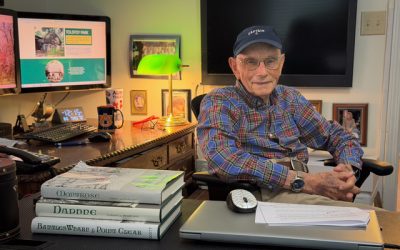
Darwin Singleton
(Photo by Mike Dumas)
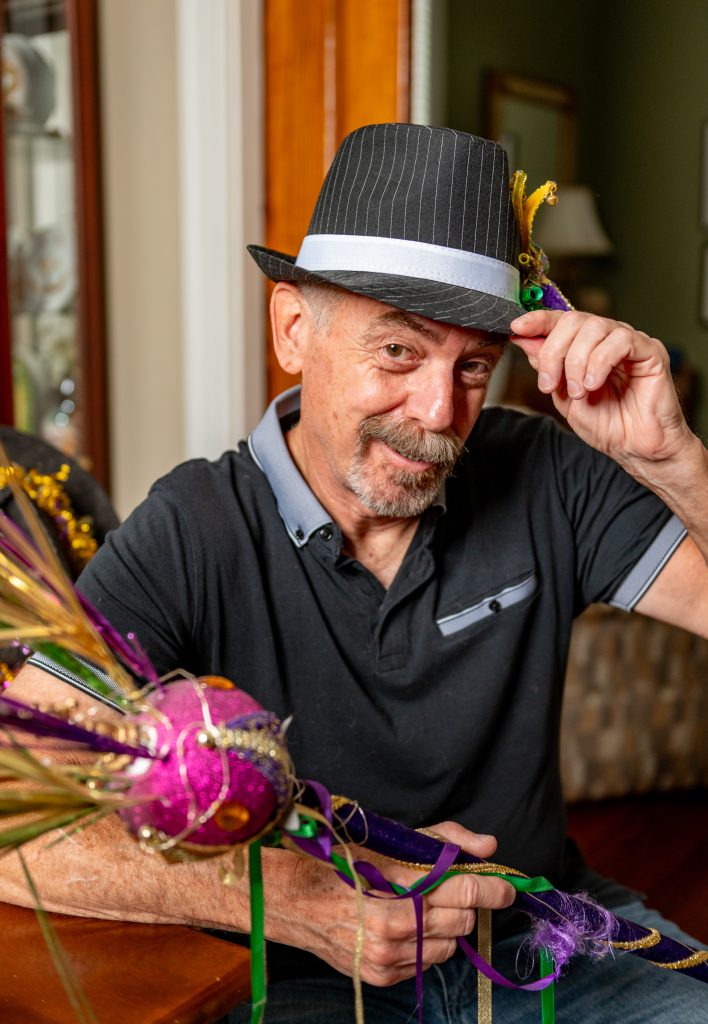
Photo by Mike Dumas
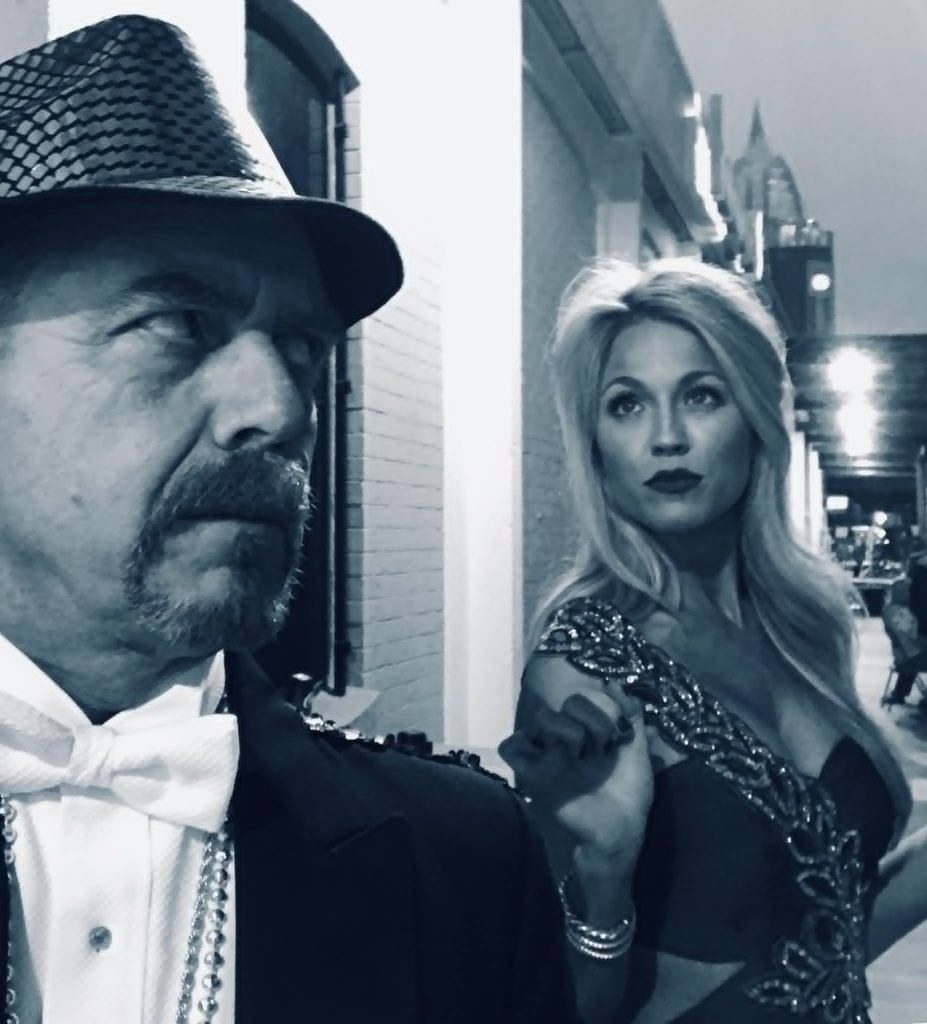
Darwin with Tara Reeves (photo courtesy of Darwin)
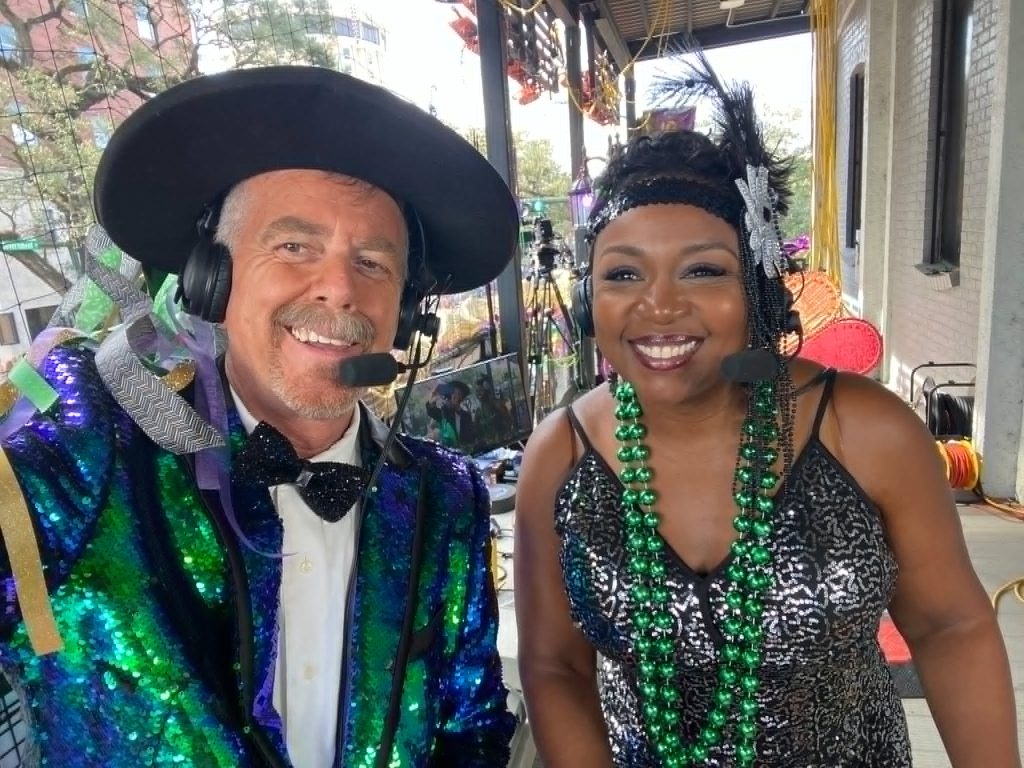
Darwin with Kym Anderson (photo courtesy of Darwin)
Darwin, I too listened to WLS in Chicago on a transistor radio every night growing up in Amory, MS. Dick Biondi was the DJ and I couldn’t get enough. I also became an overnight DJ during high school/college at WABB. RIP Bernie Dittmann. Those were good years!
Enjoy your retirement as much as I do.
Jay Agnew
Congratulations on retiring! Sleep in the first week and relax, then find a volunteer job you will come to love! Maybe mentoring young high schoolers who want to get into broadcasting! Or move back home to keep Donna D out of trouble!
Darwin leaves us a sparkling legacy! I am so honored that I got to work with him as co-emcee for Osiris for over a decade! We cut up so much and it was magical! I love his love for Mobile and its citizens! Looking forward to whatever stories he has to tell us about who we are!
Darwin you know you are one of my must favorite people, friends and coworkers! I already miss you! You have definitely made your mark in this city. I know you aren’t done yet! Best wishes, Kathryn
I love this!!!