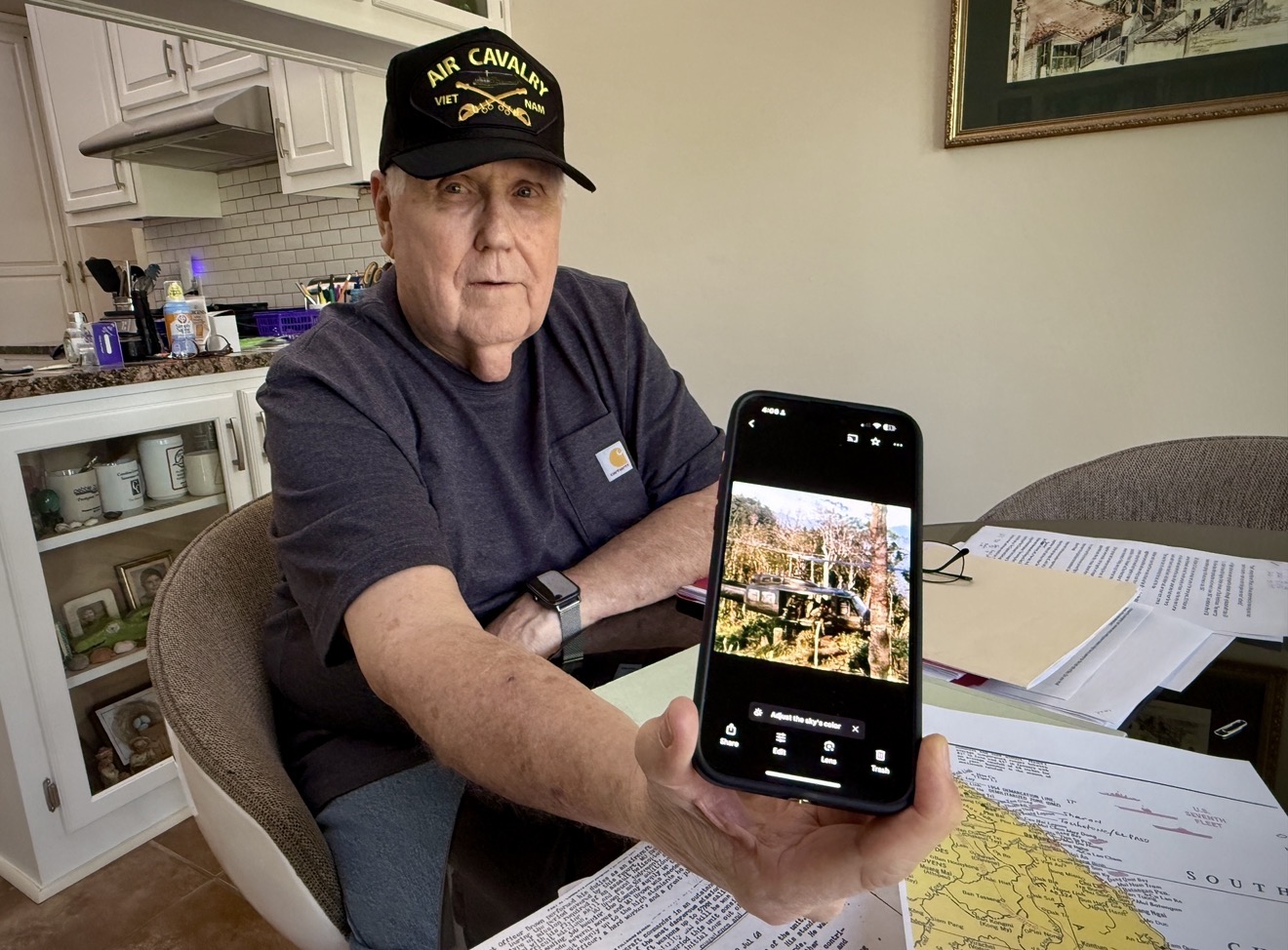
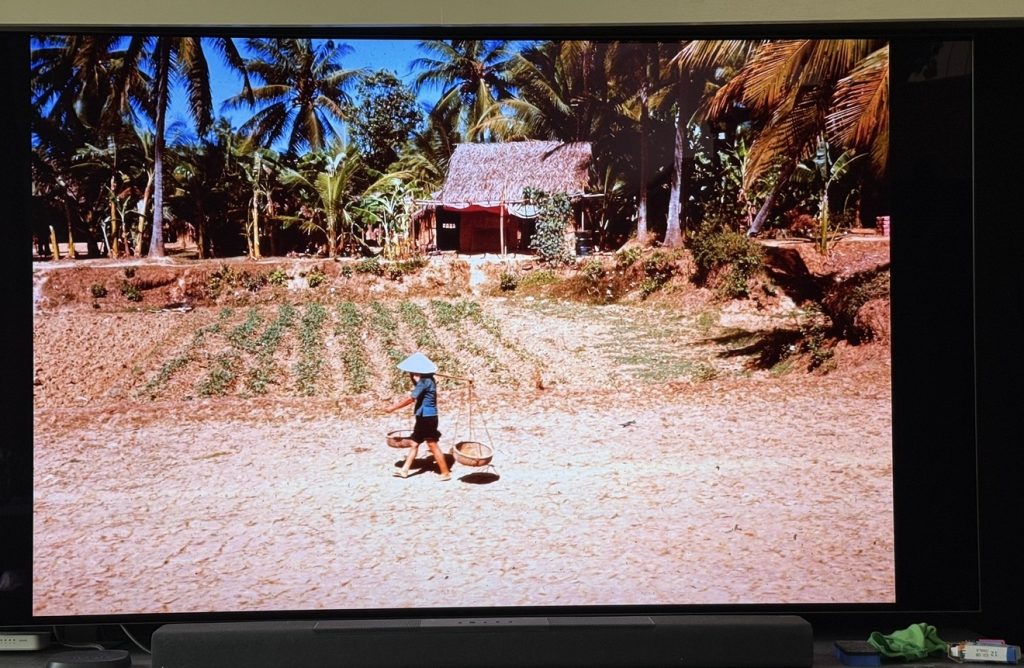
“Vietnam was really a two-class society: the rich and the extremely poor. The extremely poor were farmers, fishermen, or both, selling their goods at the street markets. They lived simply, but most of them were pretty happy.
It didn’t take us long to look at each other and ask: Why are we here? What are we doing? These people didn’t have much money or assets. They were doing well if they had a water buffalo, and they didn’t want us to shoot it. How much better off were they going to be, whether they were ruled by a communist or a capitalist? The people carried on, like nothing was going on. But then somebody might bomb their homes overnight.
There were kids everywhere. They may be going to school one day and be under attack the next. We thought one little kid was an orphan. He wasn’t. He was caught with hand grenades wrapped in electrical tape, dropping them into fuel tanks. Other kids would steal anything. They were just trying to live.
There was also a guy we called ‘One Shot Johnny.’ His dream was to shoot down a helicopter. Every night we’d be flying back in and–bang. A tracer went by. His shot became our sign to turn for our base. He couldn’t hit anything, and we never shot at him.
It also seemed like there was no planning in Vietnam–wait for an attack and then go into full alarm mode. I learned how to compartmentalize. We had a rule: if you get in the cockpit and feel fear, get out and let somebody else take over. It became just another day at the office: my office just happened to be in the air.
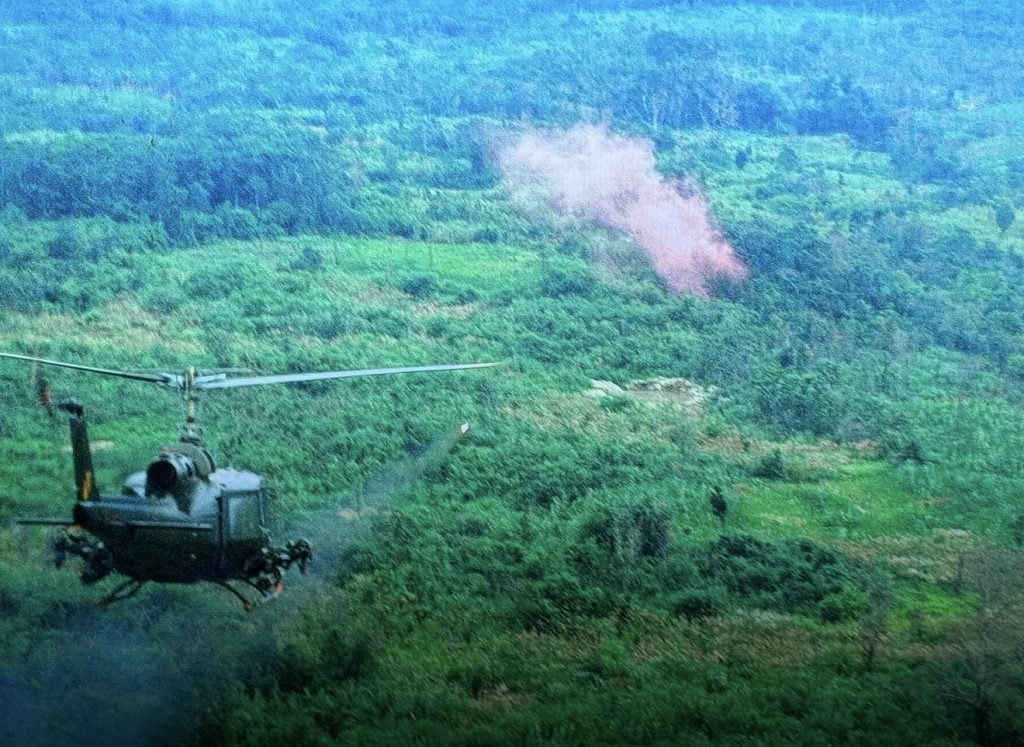
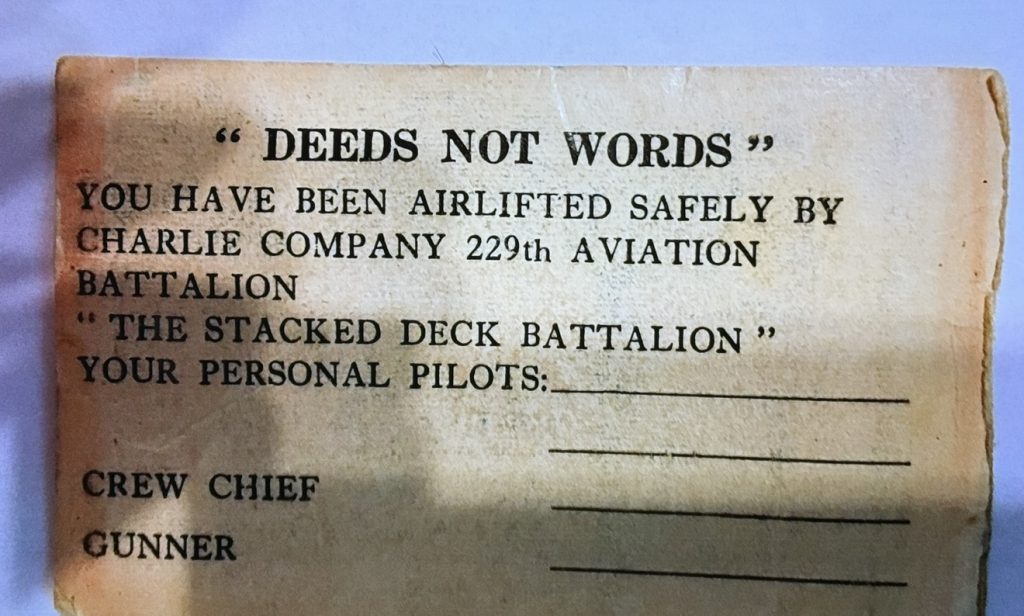
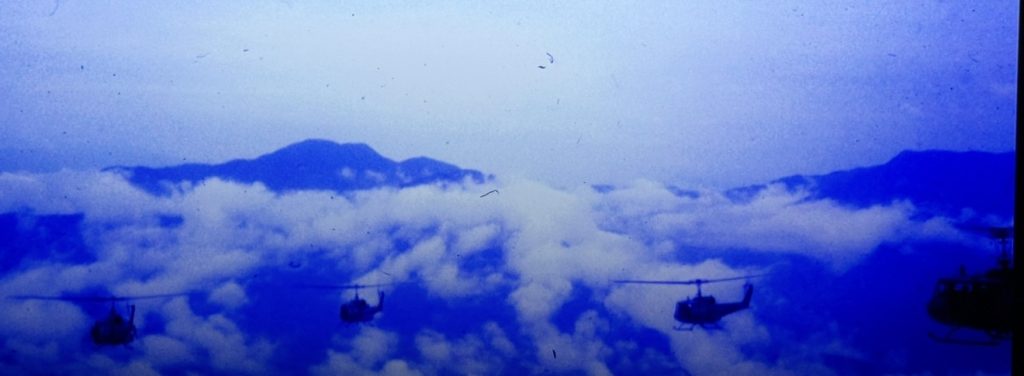
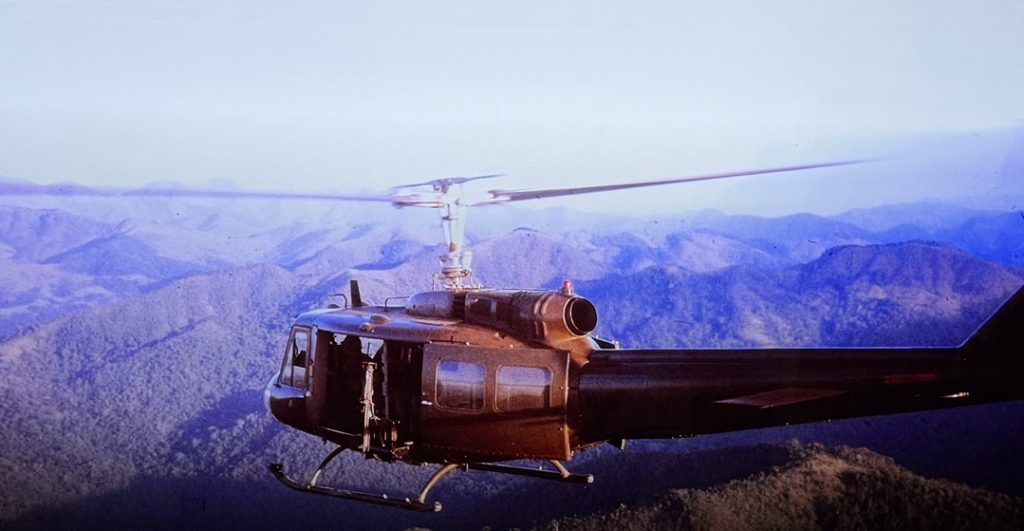
We inserted troops, transporting eight men at a time. If troops were under attack, we’d bring in ammo and take out the medical evacuations. Haul out wounded. Bring in ammo. Wounded. Ammo. Dead. Ammo. Some bodies were alive–I could hear them calling for their mamas. I did everything I could to get them back home.
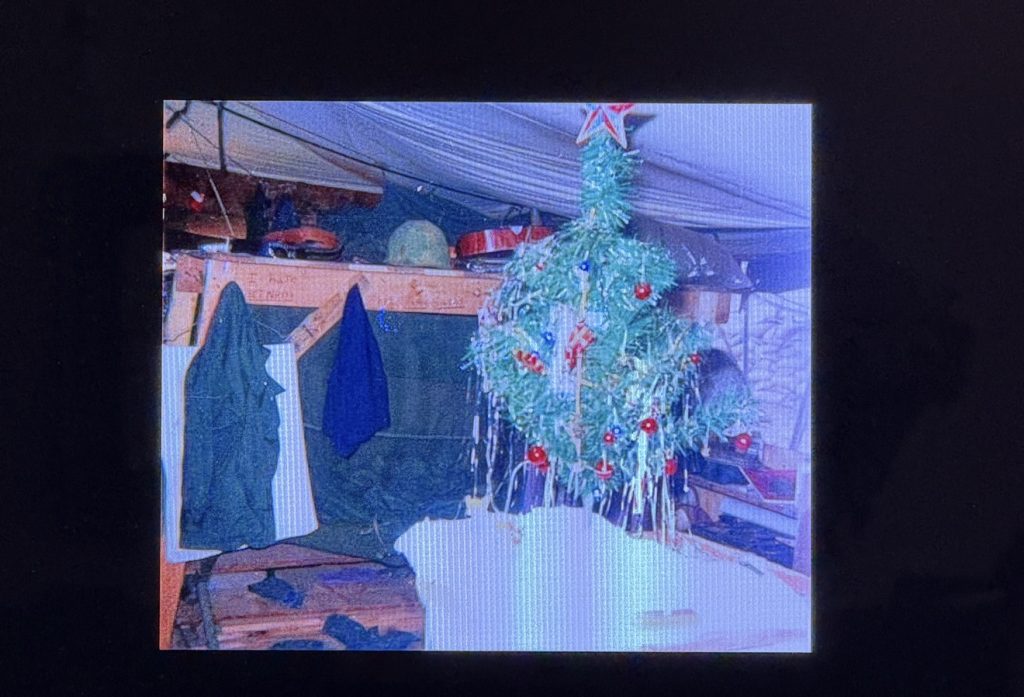
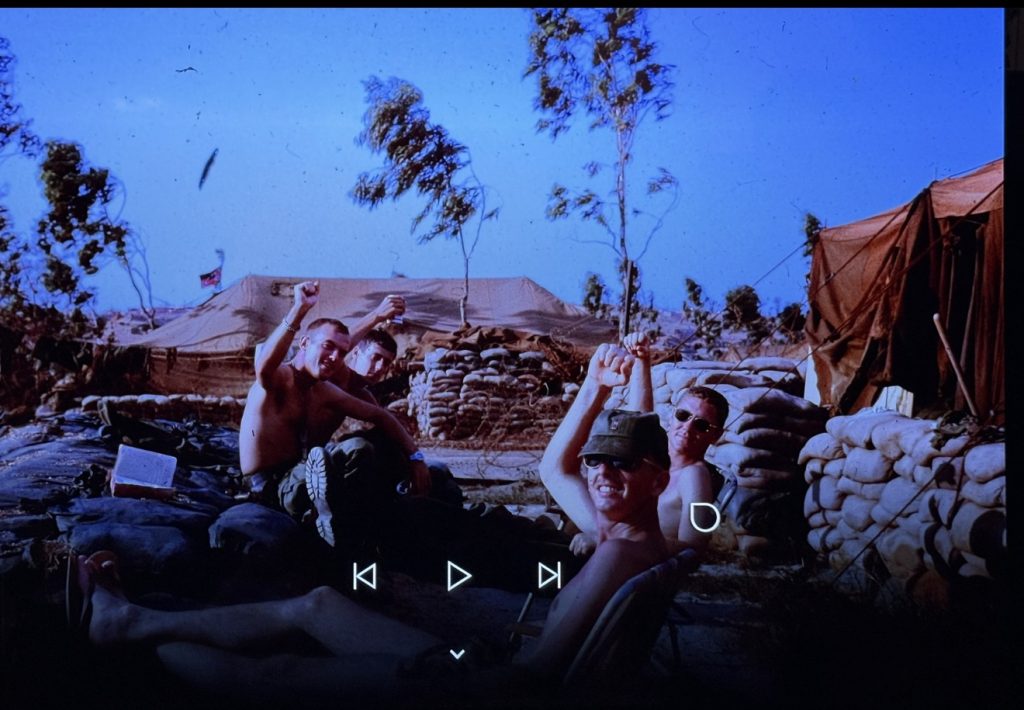
I became good friends with the guys I flew and lived with. We decided early on that complaining wasn’t going to make this go by any faster. Might as well get comfortable and enjoy life on the days we didn’t have duty. We put up a water tank warmed by the sun and had the Cadillac of showers. The water was so chlorinated that we added strawberry Jell-O so we could drink it.
I volunteered for supply officer duty and could get anything. We got about three helicopters full of empty boxes and used them to build an elevated floor in our tent–other guys were living in mud. We built a little bar at the end of our tent and got all the beer and hard stuff we wanted. We traded the Air Force guys boxes of camo poncho liners for a generator, adding in a few more for delivery. Two days later, one of their big helicopters comes flying over the base with a 20 KW generator hanging from the bottom, dropping it at the back of our tent. We also added a couple of fans and chairs, and had us a club going on. We drank beer and had our debriefings at night. Those helped our attitude, too.
Air crews drew a heavy burden. The normal aircrew kill ratio was one of 18. In January 1968, we relocated to LZ Sharon, situated 17 miles south of the Demilitarized Zone (DMZ). Our kill ratio was one out of 13 during 1968 – 68 Tet, Khe Sanh, and the A Shau Valley. I was convinced three times that I was dead and prayed to Jesus for assistance. There was no way I was getting out of this without help.
The numbers in my flight log tell a story. There was one day with 10 and a half hours, 110 landings. We were carrying ammo in and wounded or dead out. We finally got hit pretty bad in the tail boom area, so we landed and thought we were done for the day. I went to get coffee, like I did at the end of every mission. But they said, ‘That one over there is running, get in it.’ They said I knew how to fly in and out without getting shot too bad. Two and a half hours later we made our last landing of that day.
Another time, we took two wounded to Phu Bai Hospital. We followed highway 1–called ‘The Street Without Joy’–flying with no lights and clipping the bottom of the clouds. Radar was down, and we couldn’t get into the clouds. Three guys came out from the trees with AK-47s. I thought that was it. We’re going to die. I dropped about 25, then 30 feet, putting the trees between us. One round hit behind me into the headliner in my helicopter. The two wounded guys got hit. We turned toward the South China Sea in case we had to ditch. My copilot didn’t have much experience and started fighting me for the controls. The crew chief pulled out his pistol, put it under the back of the copilot’s helmet, and said ‘Let go of the controls.’ We made it into a base in the jungle. But the chopper was damaged too badly to fly again. Another chopper was waiting to take the wounded to the hospital. I felt like a louse because both guys were shot, but it was in the fat part of the leg, and the medic had already treated them. I got a couple of slugs out of the headliner and gave one to each one of them.
I have no idea how many wounded I’ve carried out-they were usually stacked in like cordwood. We rarely knew whether the people we carried back lived or died. I had a 19-year-old lying on the floor, barely breathing. Was he going to make it? I didn’t know. I risked everything to get him back. The medics said he was dead as they took him off the chopper. That’s tough. I remember it as if it were today.
My friends left a few months before I did. It was hard dropping them off. I left Vietnam in August 1968 but didn’t fly in July. The captain told me I had 1,049 hours of combat and had done enough. They offered to send me to Taiwan for the rest of my time. I took that deal. I served for two more years after Vietnam and trained other pilots–that helped me process what I saw in Vietnam.
I’ve lost 40 percent of my lung capacity because of the Vietnam War–asthma induced by GERD with recurrent bronchitis. It took me over 10 years to get the VA to agree that maybe Agent Orange had something to do with it. Agent Orange is dioxin they used to kill the vegetation. It was kept in orange barrels, so the name stuck. We sat on those barrels like chairs. They assured us it was fine; it just kills weeds. Thanks.
The lessons I learned from Vietnam were teamwork, duty, and being part of something bigger than myself. Being on the helicopter team was my purpose and what I was good at. It was an adrenaline rush. Getting shot at, near death, combat. It was addictive.
My opinion is that we should never, ever send people in to fight unless we’re willing to do what’s necessary to win. What do we promise people who help us? Don’t tell somebody you’re going to take care of ’em if you don’t take care of ‘em.”
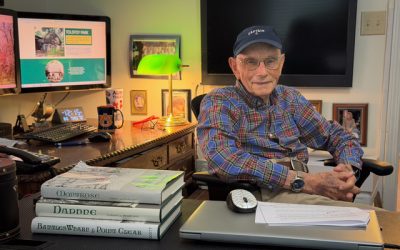
Phillip


I did not serve in Vietnam but knew many who did. Some were damaged by what they had to endure. I was talking to one of my friends about his time there. He got quiet and then said, “They lied to us.”.He meant the U.S. leaders. Zane died from agent orange exposure a couple of years later. I really miss him..