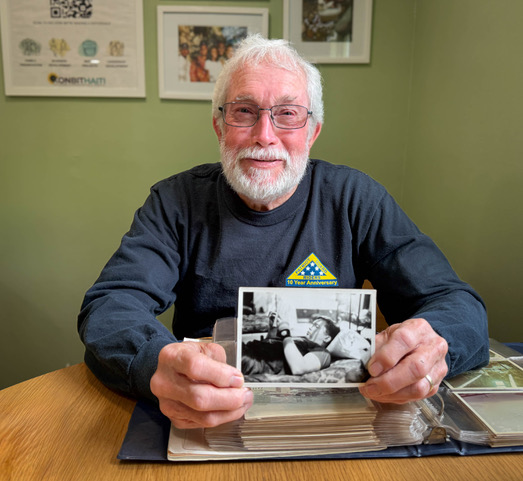
“I got out of high school without much fanfare. I was good at math–that’s the only way I made it through school. I wasted my time in college for a couple of years. By then, the Vietnam draft was coming up, and I was eligible. I joined the Army to get into electronics and make a career out of it later. I went to basic training and six months of radar school.
I was trained as part of a scout team setting up perimeters and monitoring areas for vehicles or personnel. But when I got to Nam, they put me in charge of repairing and servicing equipment, from multimeters to oscilloscopes. All sorts of things came in, including a chaplain’s field organ used for services in the field. One of our guys contacted his father in the U.S., asking for ideas on repairing it. His dad sent us some parts, and we fixed it. After that, there was always another chaplain bringing an organ in.
The only time I rode on a helicopter was to repair an organ in a base camp chapel on Christmas Eve. Small arms were coming into the camp. The pilot said we needed to get out of there. We heard the incoming. The pilot came back and said, ‘Now.’ We were the last flight for several days because Charlie–the Viet Cong–were trying to interrupt.
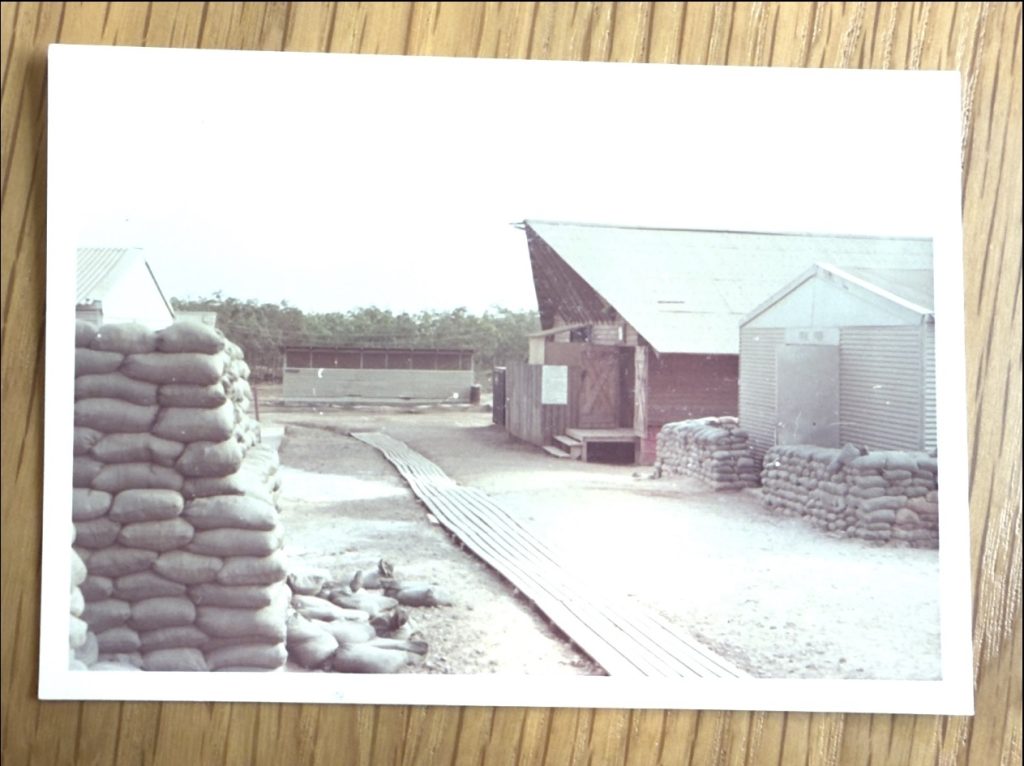
I was stationed at Long Binh Post, the largest Army base in Vietnam. It was just north of Saigon. We had rocket attacks about once a week. There were just two seasons in Vietnam: wet and wetter unless there was a dusty season. All of Vietnam was red clay.
We worked 12 or 14 hours a day, sometimes getting Sunday afternoons off. Those were long days, but somebody always depended on whatever you were doing. I even pulled KP, kitchen police, washing pots and pans and cleaning the kitchen. Through that, I learned perseverance and how to deal with personalities.
I left Vietnam in January 1970. The one thing I remember was that they told us not to wear our uniforms home. I didn’t have money to buy civilian clothes, so I wore my uniform. We flew so low on the flight from New Orleans to Mobile that we could see where Hurricane Camille came through a few months before. It was like someone had taken a gigantic lawnmower and cut north from the Gulf. I was on a reactionary force with a friend from Louisiana on the night of Hurricane Camille. We stayed up listening to Armed Forces radio, not knowing if it was coming toward his home or mine.
When I got home, I hung up my uniform in a closet in the corner and closed the door for a long time. The VFWs and the American Legions didn’t want Vietnam veterans: said we weren’t in a war. I put the war behind me and my heart and soul into working.
The war was unpopular and fell off the radar: out of sight, out of mind. People forgot about it. If our paths had crossed 20 or 40 years ago, I wouldn’t be talking about Vietnam like this–would have found a way to sidestep it. But that’s changing. I’ve been a member of the American Legion in Fairhope for about three years. It’s a good group with good people who I can relate to: people not afraid to work for a project and help somebody else out. I also got involved with the Patriot Guard.
I still have my boots from Vietnam–they were the most uncomfortable damn boots–and used them in a boot drive to help raise money for the American Legion. Things have changed; maybe part of that is my age, but I started opening the Vietnam door again.”
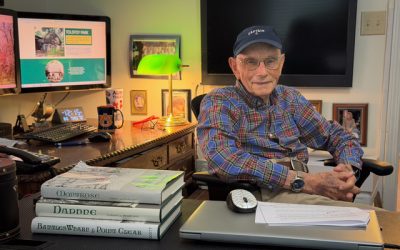
Gerald
(April 30 is the 50th anniversary of the Fall of Saigon. This month, we are sharing stories of Vietnam Veterans to remember the war.)

0 Comments