
“Uncle Sam sent me an invitation for the draft for World War II. I left on August 12 and went into the Army. My sister left that same day to become a nun in New Orleans. That was a tough day for my mother. I was a little country boy. I didn’t know much about the war, the draft, or what I was being thrown into. We were teenagers; we had no choice, just accept it. Jackie Robinson was in my company and we trained together—they discharged him because he was pigeon-toed. I was shipped on a boat from New York to England for eleven days and didn’t know anyone with me.
I was in the 761st tank battalion, an all-Black regiment. We weren’t supposed to serve beside white troops. We were originally marked for D-Day and Normandy Beach, but missed that one. Four weeks later, we landed on Normandy beach and went to the front of the line. General Patton met us at Camp Nancy in France. He stood on a table with a .45 on each hip, giving his speech about what we were going into and how we were the first Black tankers to fight for the Army. He said, ‘You’re the first negroes going into the battlefield in this war. I’m looking to you, the nation is looking to you, and your families are looking to you. Don’t let them down and don’t let me down.’ He said he was there with us.
They put us in a rough area. I think they were testing us. Until then, Blacks had mostly been quartermasters shipping supplies. Our battalion became known as the Black Panthers; we were sent out on missions like the Tuskegee Airmen to fight face-to-face with the Germans. Fields were destroyed and cows were hanging from trees where the Germans rolled up. It was a terrible sight to see.
I was a tank gunner. The tank was just steel put together with a turret. We met up with a German bazooka squad. A shell hit the turret of my tank, drilling a hole and exploding when it hit the hot oil. I blacked out. Thank God. They drug me out of the tank, burying me in a trench for protection and drugging me with morphine. The only thing you could see was my face. It was about 12 hours before they could get me to the field hospital. I went from France to a hospital in England for eight or nine months. I survived with the help of the Lord, saying the rosary quite often.
I was shipped to a hospital in Memphis, where patients were segregated by race. I was excited when they gave me a recuperating furlough to go home. I walked to the front of the station in Memphis to wait for the 4 a.m. train to Mobile. A White guy told me, ‘n—— are supposed to be in the back.’ My arm was in a cast. I thought, ‘Lord, this is what I get after all of this.’ I said ‘Bless him Lord’ and went to the back.
The Army sent a telegram to my family about being wounded, but my family didn’t know when I was coming home. I walked up to the house; my mother started crying. We all went to church that morning. I was in the service for two years, 11 months, and 16 days. I tried to forget the tragedy I saw.
The Army connected me to a radio shop in Mobile for electronics classes. I fixed radios and TVs from my repair shop at my sister-in-law’s house. I also worked at the hardware store in Mt. Vernon for 27 years. I was a manager, but some customers refused to talk to me; they wanted to talk to the owner because he was White. I thought, “I am human just like you are. I’m sorry you feel that way. God bless you.’ Being treated like that over and over chewed on me, but God got me through.
I also drove a school bus. If my kids didn’t get on the bus when I left for school, I wouldn’t make a special stop for them. I have eight kids and gave them all a chance at college. None of them had college debt.
I am 95. My wife and I have been married for 72 years. We both grew up in the Bucks area and have known each other all of our lives. My version of how we started dating was she got out of her seat on the Greyhound bus and sat next to me on the ride back from Mobile. She claims it was when she got out of class at Bishop State and went to her sister’s house with a guy I was waiting to catch a ride with. She said I pushed him into the bushes. I guess we need to go with her version.
My arm is still scarred from the war. It’s a reminder of the miracle that I’m still here and that the rest of this life happened. I thank God for it all.”
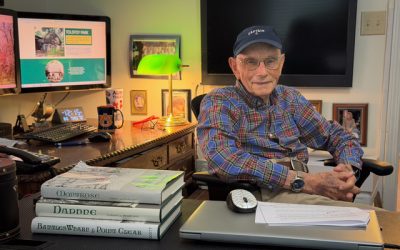
Robert Andry

Thank you for your service to our country, Robert. May God bless you!
This is 2025. I hope you are still enjoying life with your sweet wife. Yes. Go with her story!! Be happy!
I’m sorry for the pain of racism that you have endured.
I grew up in south, south Alabama, too.
Here’s saluting an American Hero posthumously…and “celebrating” TWO SWEET ANGELS (having been married for 72 years) reunited in Heaven !