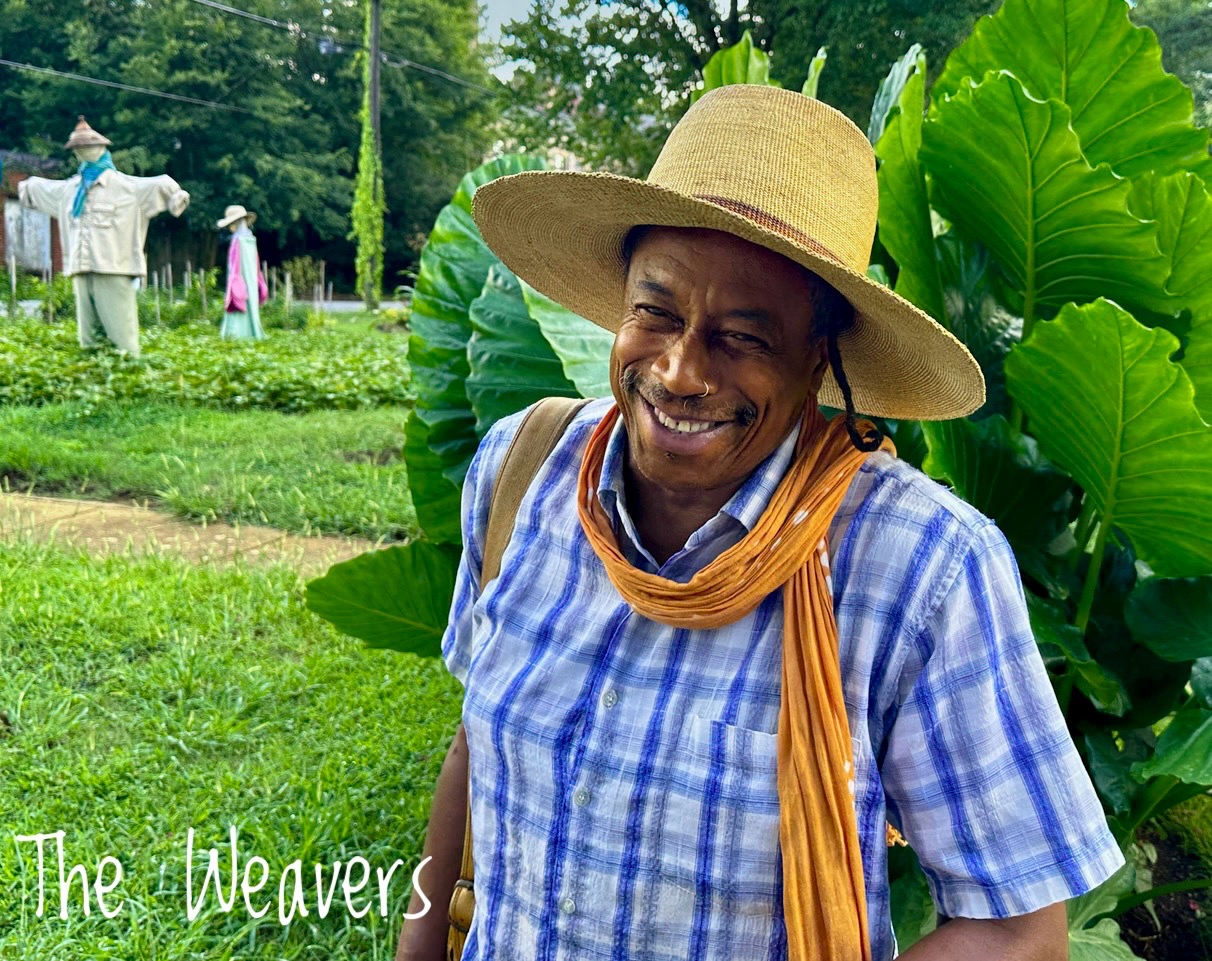
“When I was a little boy, I spent the summers with my Grandparents in the country town of Akron, AL. I eagerly explored the woods and spent time with the farm animals. I had little nooks and crannies near streams where I would play with tadpoles and salamanders. I put baby frogs on leaves and sent them sailing downstream. It was a whole world inside a small space and shaped the foundation for the best part of me.
My Father, Rev. Escus Tubbs Sr., was an older man. He was gentle but strict on me and my two brothers. He didn’t allow TV in our home. We could only listen to gospel music on the radio. When he was away, my mother would sneak us to a neighbor’s house to watch a little TV. My father was an unlettered man, but now I understand this decision was evolved for his time. I was born an artist; having no TV meant more time for creating.
I married at 19, against my mother’s advice. We soon had four daughters. I was overwhelmed with the responsibility. One evening, I was with friends who were smoking crack from the same pipes we used to smoke marijuana. In my ignorance, I gave it a try. That led to eight years of addiction, the end of my marriage, and homelessness.
My addiction stopped in 1994, and I went to work for Wade Bradbury, a blacksmith and fabricator who said he would teach me all he knew. I learned the craft, and my mother put me in my own business. I was a poor businessman and underpriced myself. I was also unorganized and had trouble producing on time. I stayed above water, but I was always drained and anxious.
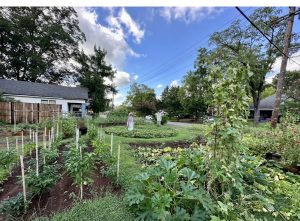
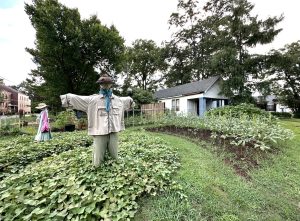
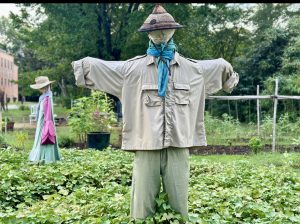
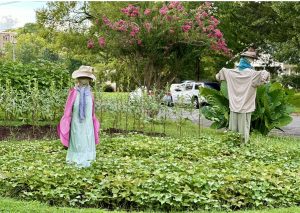
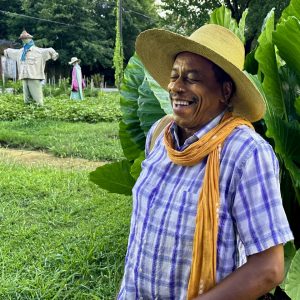
I’ve had anxiety most of my life, but I bring the jolly at the same time. A few years ago, my anxiety brought me to a breakdown. I found consolation in flowers and plants such as loofah. I gave loofah seedlings to the Bush Hills Community Garden. April Muhammad, the summer camp facilitator, invited me to the harvest to demonstrate the cleaning process with the children. Soon after, I started a garden adjacent to my studio and home in the West End neighborhood of Birmingham. April named it Sacred Space Garden. The purpose was for children to plant the garden, and everything would be free for the community.
Neighbors were estranged even though we live close together–like most neighborhoods. Conversations were quick hellos and goodbyes. I yearned for something deeper and realized my small garden space could set a new tone in the community. Working in the garden, I started waving and speaking to everyone who passed, exchanging phone numbers whenever possible. I have created a space of calm, sharing, and relaxation. I also want to help soften the macho vibe of men.
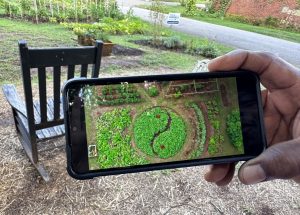
The garden is open to anyone, and we harvest and deliver items to elders in the neighborhood. We have a yin-yang sweet potato bed. I love watching kids dig the potatoes. Last season, Alfredo Boyd surprised us with 50 little warm sweet potato pies for the sweet potato dig. We’re making it an annual tradition. This Sacred Space has far exceeded my expectations.
I am erecting a wood and metal fence for a cozy backdrop. I’m also making hand-forged iron and gabion benches and putting a giant hammock between the crepe myrtle and pecan trees. This little garden adds beauty and enhances the neighborhood’s social life. It has also been good for my serenity and has given me a new enthusiasm for ironworking in a more relaxed and organized direction. I am making healthy contributions to Birmingham. This garden is just going to get sweeter.”
Mustafa
Mustafa’s story begins the annual Souls series of The Weavers. The Weavers stitch together the fabric of society, even as many forces are ripping it apart. They create gardens that change the heart of a neighborhood and feed elderly neighbors. They help others transition from addiction to recovery or feed children who go to school hungry. If you know a Weaver who is making your corner of the world a little better, send me their name and a little bit about them.
0 Comments