
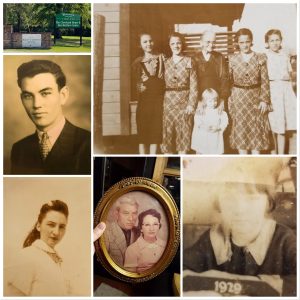
“I was born in 1920. There were six kids in my family. My daddy nicknamed everyone and called me Sister Sue after a fast racehorse. Daddy was a character—he worked at the telephone company but traded cows and horses on the side. His friend was a butcher, so we always had meat on the table, even during the Depression.
We weren’t country people, but we lived as country as we could. One of my chores was shaking cream in mason jars to make butter. We had a springhouse in the creek to keep the milk, butter, and eggs cold.
My grandpa was a police officer on the corner of Dauphin and Royal Streets. He and Nana, my grandmother, got around by horse and wagon. In the mornings, Nana dropped Grandpa at the streetcar going downtown. Then she went to Spring Hill College Catholic Church for morning Mass and stopped by the hardware store to pick up a load of lumber for the carpenter who was building their little house. She took the wagon back at 6 p.m. to pick up Grandpa.
Everyone loved Grandpa. He was the ‘Beloved Officer of the Day,’ and women brought him baked goods. He was proud of wearing his dress blues and didn’t want to get his shoes wet when it rained, so his boys would put him in a wheelbarrow and wheel him to dry land.
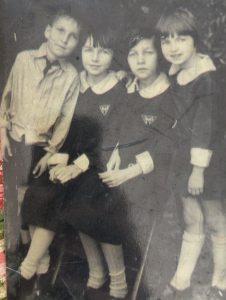
My Uncle Fred and Aunt Edie were vaudeville performers, and they adopted Molly Mae who was Darla in the Little Rascals for a time. Molly Mae’s acting career ended after she went deaf from the chickenpox virus. Her family moved here, and she became one of us. Our friendship lasted all of our lives. We had a garden filled with squash and Molly Mae would say, ‘Squash. Squash. Squash. Molly Mae does not like squash.’ She spoke in the first person and made me laugh. Our friendship lasted all of our lives.
I went to St. Mary’s Catholic School in the 1920s. Girls and boys stood on different sides of the churchyard waiting to go in. The boys got the sunny side, but some mornings it was so cold that I found a little nook on their side to get out of the wind. I was careful because girls got in trouble for getting caught on the boys’ side. Some mornings it was so cold that I slipped up the steps and into the church.
When I was older, I took a test to get a scholarship to the Convent of Mercy High School. Some of the girls looked at my test, but I noticed I had different answers. When I won the scholarship, I couldn’t believe it. I thought I was the one with the wrong answers. Two of my best friends at school became nuns.
We lived at 106 Mohawk Street. Some mornings, I took the streetcar to the A&P grocery store at 8 a.m. to get two big bags of the coffee they ground in the mornings. I was a shy teenager and got embarrassed when everyone in the street car smelled the coffee and looked at me.
I was 16 when I met Giovanni Bru at the CYO (Catholic Youth Organization). He was so handsome, and we hit it off. Giovanni borrowed his brother’s new car for dates. One night we took the car to a dance and turned it over. We rolled it back and drove home. His brother didn’t know we had his car that night.
Giovanni and I were married for almost 60 years and had eight kids. We didn’t have a washer or dryer, and I wore out my wedding ring wringing out cloth diapers for all of those kids. I washed three loads of clothes a day and was constantly hanging clothes on the line to dry. Sometimes I sat in the bathroom for a little time to myself.
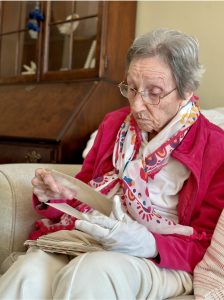
Giovanni was in the Army and stationed in Alaska during World War ll. I kept all of his letters and wrote many to him. I journaled about everything.
We took family vacations over the bay. We usually stayed for two weeks, but one year Giovanni hit it big at the dog tracks, so we stayed for five weeks at Mullet Point.
I didn’t miss Sunday mass. I went at 7 a.m., then came home and put the roast in the oven. My neighbors were jealous that I was finishing Sunday lunch as they were going to church. I also cooked beans, turnip greens, and cornbread. There was always a pot of beans on the stove. My son later wrote a song about me: ‘Mama Raised Children, She Cooked Beans’.
I love to sing and dance. I come from a family of singers, and Mama sold eggs to pay for my singing lessons—they were $1 a lesson. I had an operatic voice and sang in the choir at St. Bridgets Catholic Church in Whistler. We sang in the balcony, and when when I sang a solo they said rattled the rafters. The nun would put her finger in the air for me to hit the high note in ‘Ave Maria’, and I took it. I can still sing ‘Ave Maria’.
In the early 1970s, I went back to work. I became a bus driver, a teacher’s aide at Augusta Evans School, and a home ec teacher at the Albert Brewer Center. Both were schools for kids with special needs.
My daughter, Dolores, was a special needs child, and I saw the trials and tears of other families with special needs kids. Some were too poor to help their children, and I brought this to the eyes of our city. I wanted a heaven for the handicapped where there was no child too handicapped to help. The city found a place for us, and we provided activities these kids needed. We also had mothers groups to care for each other.
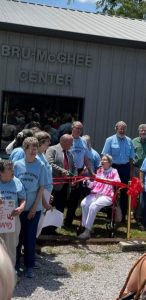
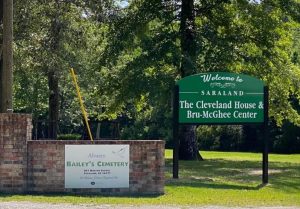
The city built The Little Red Barn for us at the ballpark and furnished a van. We called ourselves Red Barn People, and I gathered up kids three times a week for activities. We later moved into The Cleveland House, the oldest house in Saraland.
We needed a bigger facility to take care of more kids, and Saraland received grants to build a new facility; there is a plaque with my name on it. They even had ‘Helen Bru Day’ on my birthday.
Someone had to do something for children who didn’t have a good place to start. My favorite saying is ‘can’t never could do nothing.’ I was determined to do what God told me, but I had to be persistent and consistent to get it done. People are helpers; if they see you doing good for others, they will help you. Give love and the rest follows.
Lean on your faith, and don’t forget to thank God. When you get something good, share it.”
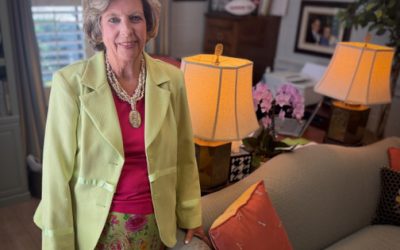
Helen Bru
(Mrs. Bru told her story with the help of two of her sons.)
—————————————————
Mrs. Bru’s story is a part of a series about the Weavers—people stitching our communities together, solving problems, and showing how to care for our neighbors. Send a message to Our Southern Souls to suggest a Weaver from your community to be featured on Souls.
Love It!!! My Mama!
What a hesrt-warming and inspirational walk down memory lane with your mother! It is a valuable reminder of what is really important a d how so little we need to make fond memories. Thank you for sharing this and give your moma a hug from me.