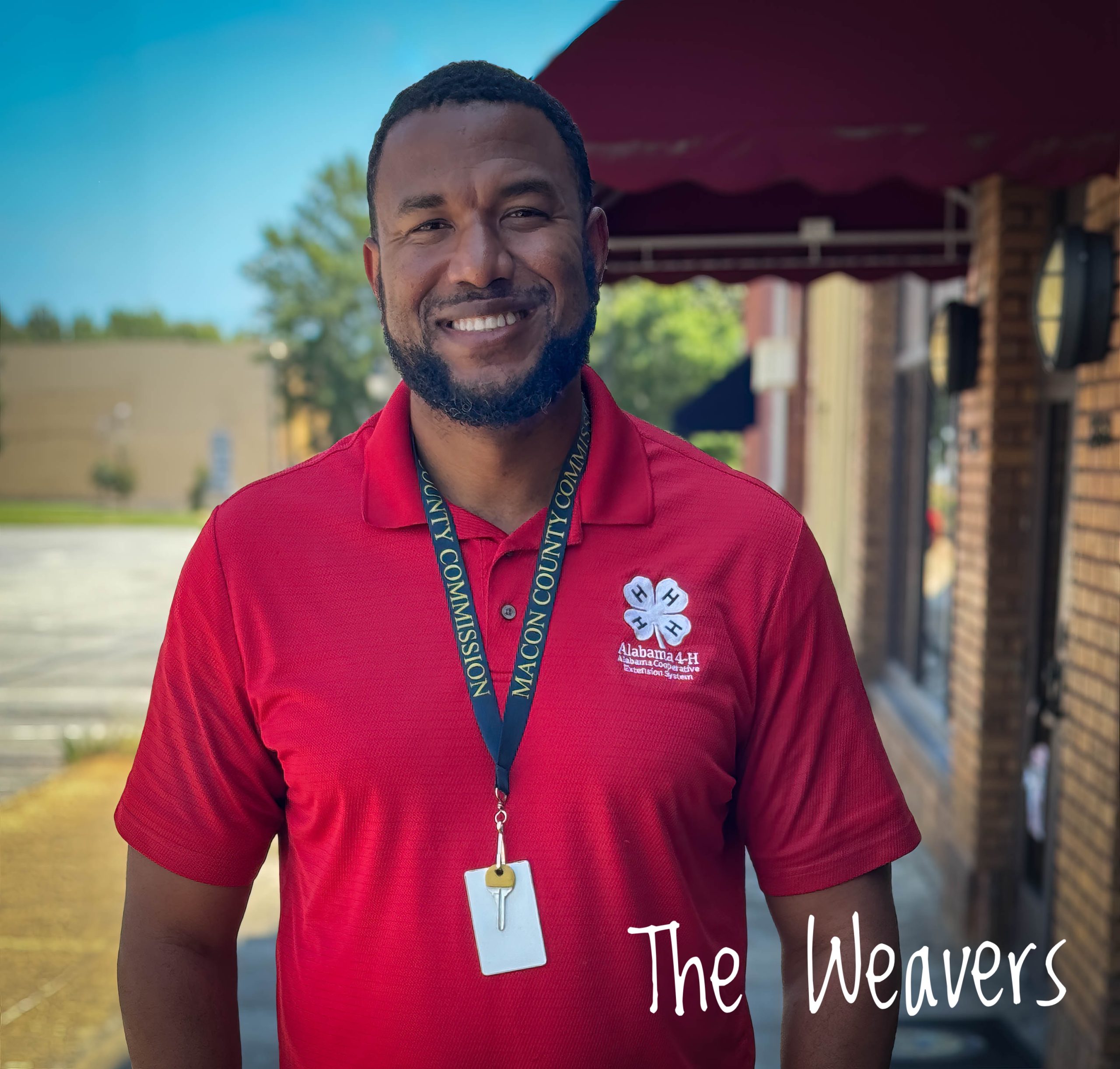
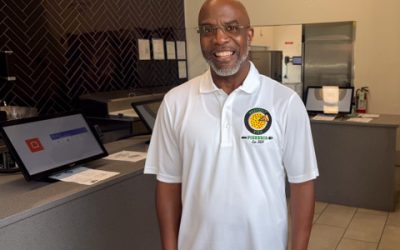
“My father lives just a few minutes from Tuskegee in Hardaway, Alabama. My mother’s family is from Tuskegee. Many of them worked at and attended Tuskegee University. My great-uncle was a Tuskegee Airman and had his certificate signed by Booker T. Washington.
Despite coming from the same area, my father and mother had different upbringings. My father was one of 21 children raised in a family of sharecroppers. They worked tirelessly on the farm, helping my grandparents sustain their livelihood, and didn’t go to college. Meanwhile, my mother grew up 15 miles away in a different environment. She attended Tuskegee University—then Tuskegee Institute—while her parents worked on campus. My grandmother served as the director of the George Washington Carver Museum, while my grandfather was employed at the VA hospital. My grandmother recalled entering Dr. Carver’s lab, where she saw him crafting new products from peanuts, like lotions and meals. Later, she traveled the country sharing her memories of working alongside him.
This region is intertwined with history. Dr. Carver, Booker T. Washington, and the Tuskegee Airmen achieved remarkable milestones despite enormous challenges. Even in Tuskegee, they navigated a perilous social climate. My mother remembers visiting downtown Tuskegee with her grandmother. She mistakenly drank from a “whites-only” water fountain, as a little girl. Her grandmother immediately reprimanded her in public, a harsh but necessary measure to protect her from the wrath of the white locals. Such acts of public chastisement were common among Black parents at the time—a way to shield their children from potentially dangerous consequences.
Tuskegee University also played a pivotal role in establishing the Cooperative Extension Program, integrating 4-H into its framework. I joined the 4-H club at Tuskegee Public School and was elected president of our group. It was a transformative experience; I had never won anything before and was eager to help facilitate our meetings. Our leader was Mr. Pulliam, one of the few Black male educators I encountered growing up—I only recall having two Black male teachers. Today, I serve as the 4-H coordinator under Mr. Pulliam’s mentorship. This role allows me to give back to Macon County and serve as a role model for the next generation. I aim to rise through the system, making an even greater impact.
Recently, I earned my PhD in Adult Education from Auburn University, fulfilling a lifelong dream of becoming a professor. I want my 4-H youth to see that pursuing a PhD is achievable and to normalize that ambition for them. A full-circle moment struck me recently: while working at a 4-H summer camp, I mentored a young man who now has a 4-H position in Montgomery. He told me that my journey inspired him. Just as he saw what was possible through me, someone will see the same through him. It’s a powerful cycle—we learn what’s possible from others and pass that knowledge forward.”
Daniel
——————
Daniel’s story kicks off The Weavers series. Stories about the people who stitch together the fabric of society while so many forces pull it apart. Who are the folks who make life a little better in your community? Send me their names and a little about them, and I’ll try to talk with them.
Lynn
0 Comments